AI for Research and Analysis: Web Search, Report Generation, Financial and Legal Assistants

Key takeaways
- The value of an AI research tool is a function of how cheaply you can verify its output — not how good the output looks, and not how capable the underlying model is.
- AI web search is the most verifiable category because it cites sources you can open. The real failure is not an invented source; it is a real source that does not support the claim attributed to it.
- A report generator may write the narrative around verified figures. It must never be the thing that produces the figures — those come from a queried system of record.
- An AI financial analyst is assistive only. Errors compound silently through a model, the consequences are financial, and "the AI calculated it" transfers no accountability to anyone.
- An AI legal assistant is the least verifiable and highest-consequence use in this set. A business that relies on it without qualified review has not saved money — it has moved the cost to later.
The short answer
The useful way to evaluate an AI research tool is not to ask how capable it is. It is to ask how much it costs to find out whether a given output is right. Research is the domain where AI writing is most fluent and least verifiable, and that is exactly the wrong combination. A wrong sales email is embarrassing. A wrong number in a board report or a misread termination clause is a decision made on a false premise, and the premise usually goes unexamined until the consequence arrives.
So the entire question for this category reduces to one variable: verification cost. Where checking is cheap and immediate — a link you can open, a figure you can reconcile against a system — an AI research tool is genuinely and safely valuable. Where checking requires a qualified professional to read the whole thing anyway, the tool has not removed the work, it has only changed what the professional is reading. Those two situations look identical on screen, and that is the problem.
| Use case | Cost to verify | Safe autonomy |
|---|---|---|
| AI web search | Low — open the cited page and read the passage | High for background gathering; never for a quoted claim you have not opened |
| AI research assistant | Moderate — sources are listed, but credibility assessment needs domain knowledge | Medium — collection and first-pass reading only |
| AI report generator | Low for the narrative, high for any figure the model produced itself | High on the prose, zero on the numbers |
| AI financial analyst | High — errors compound silently and need a qualified reviewer to trace | Assistive only, with reconciliation on every extracted value |
| AI legal assistant | Highest — verification requires a qualified lawyer reading the source document | First-pass extraction and summarization only, never a conclusion |
The principle
The value of an AI research tool is a function of how cheaply you can verify its output. If you cannot describe, in one sentence, exactly how you would check a given answer, you are not using a research tool — you are accepting an assertion.
A citation existing is not a citation supporting the claim
The fabricated-source problem is the one everybody knows about, and it is the less dangerous of the two failures because it is trivially caught: the link does not resolve, the paper does not exist, the case cannot be found. Anyone who checks at all will catch it. The failure that actually reaches decisions is subtler. The source is real, the link resolves, the publication is reputable — and the page simply does not say what the sentence in front of you says it says.
This happens for structural reasons rather than as an occasional glitch. A model retrieving several pages and writing one paragraph is compressing, and compression drops qualifiers. A finding that applied to one market becomes a general claim. A projection becomes a measurement. A statement someone was quoting in order to disagree with it becomes an endorsement. Each of these produces a sentence with a legitimate citation attached and a meaning the source would not support, and none of them are visible without opening the page.
Which means the only real verification step is reading the source rather than the summary, and specifically finding the passage the claim rests on. Confirming that a link is not broken is not verification. It is the appearance of verification, performed quickly enough to feel diligent, which is why it is so widespread.
AI web search — the most verifiable end of the spectrum
AI web search retrieves live pages and returns a written answer with the sources it drew from, instead of handing you ten blue links to reconcile yourself. It sits at the good end of this spectrum for one reason: the verification path is right there. You can open the page, find the passage, and know within thirty seconds whether the sentence is honest. No other category in this post offers a check that cheap.

The right habit is to treat the generated answer as a map rather than as the territory. It tells you which pages are worth opening and roughly what they contain, which is a genuine time saving on the search phase. It does not tell you what those pages say with enough fidelity to quote, cite, or make a decision from. Anything that will end up in a document with your name on it gets read at source.
Why understanding AI citation behavior helps you calibrate
It also helps to know how these systems choose what to cite, because the selection is not a quality ranking in the way people assume. Sources get pulled in because they are structured to be extractable, because they state answers directly, and because they are corroborated across the wider web — not because an editor judged them authoritative. I write about that mechanism from the publishing side in the post on why AI search engines cite some brands and ignore others, and the companion piece on how to optimize for Google AI Overviews covers the same mechanics for one specific surface. Read either one as a consumer of AI search rather than a publisher and the conclusion is uncomfortable but useful: a citation is evidence that a page was retrievable and quotable, which is not the same as evidence that it was right.
AI research assistant — strong at gathering, weak at judging
An AI research assistant goes further than search. It takes a question, works out what to look for, gathers a set of sources, reads them, and returns a synthesis. On the mechanical half of research — finding material and doing a first pass over it — this is a real and substantial time saving, and it is the strongest honest case for AI in this whole category.
On the other half it is close to useless, and the gap is not obvious from the output. Judging whether a source deserves weight requires knowing the field: which publications have standards, which numbers are self-reported by parties with an interest, which studies were superseded, which vendor whitepaper is marketing wearing a methodology section. A model reading text has weak signal on any of that and will not tell you when the signal is weak.
The specific danger of synthesis
Here is the part that makes synthesis riskier than raw retrieval. Three weak sources summarized confidently read exactly like three strong ones. The prose is the same. The structure is the same. The tone of settled fact is the same. And synthesis actively destroys the signals a person would have used to discount the material — the thin domain, the undated page, the vague methodology, the fact that all three sources trace back to a single original claim. Once it is compressed into a paragraph, those tells are gone and they are not recoverable from the paragraph.
That is also how a single unsupported claim gains apparent corroboration. Three pages repeating one press release look like three independent confirmations to a retrieval system, and the synthesis will present them as agreement. The mitigation is not clever prompting. It is opening the sources far enough to notice they are the same source.
The correct division of labor is the one the AI agent versus assistant versus automation guide sets out: this is assistant work, where a human reviews every output before anything happens with it. Research that feeds a decision is consequential, low-volume judgment work, and that is precisely the shape of problem the assistant architecture exists for.
AI report generator — generate the narrative, never the numbers
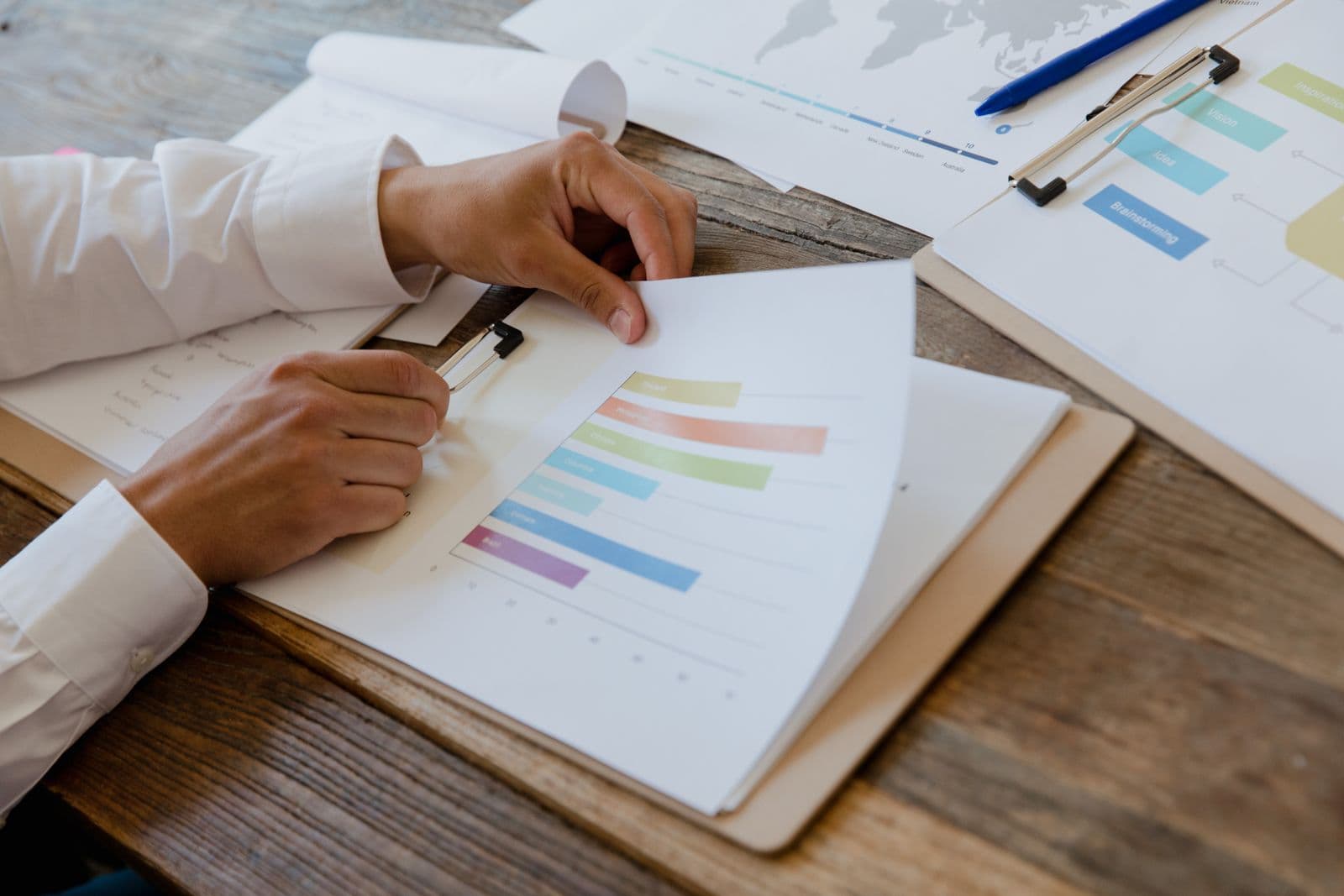
An AI report generator assembles a recurring document — a monthly performance review, a client report, a board pack — by pulling figures and writing the surrounding explanation. There is a real distinction inside this category that determines whether it is safe, and most implementations get it wrong in the same way.
The safe pattern: the numbers are queried from the system that owns them, passed into the prompt as fixed inputs, and the model writes the sentences around them. The unsafe pattern: the model is handed a PDF, a dashboard screenshot or an export and asked to report what it sees. In the second case the model is not retrieving a number, it is reading one, and reading a number off a document is a probabilistic operation that fails in ways no reviewer is well equipped to catch — a transposed figure, the previous period column, a subtotal read as a total.
Prose errors are self-correcting under review because a human reading a sentence about performance can tell when it does not match their understanding of the business. Numeric errors are not, because nobody reviewing a report re-derives the numbers. They are checking that the commentary sounds right, and a well-written paragraph explaining a wrong figure sounds exactly as right as one explaining the correct figure.
The hard rule
Every figure in a generated report comes from a query against a system of record. If a number in a report cannot be traced to the query that produced it, it does not go in the report — regardless of how confident the model was about reading it.
What this requires before you build anything
This is the prerequisite nobody wants to hear, and it is the reason most report automation stalls. Before a report generator is worth building, you need agreed definitions for every metric it will state, a single owning system for each one, and programmatic access to that system. If two teams calculate the same metric differently, automating the report does not resolve the disagreement — it picks one side silently and publishes it monthly with growing authority. The definitional work is the project. The generation is the easy part that comes after.
AI financial analyst — assistive only, and be direct about why
This is the category where the marketing runs furthest ahead of what should actually be deployed, so it is worth stating the position plainly: an AI financial analyst is an assistive tool. It gathers, extracts, drafts and flags. It does not analyze, conclude or sign off, and the reasons are structural rather than a matter of waiting for better models.
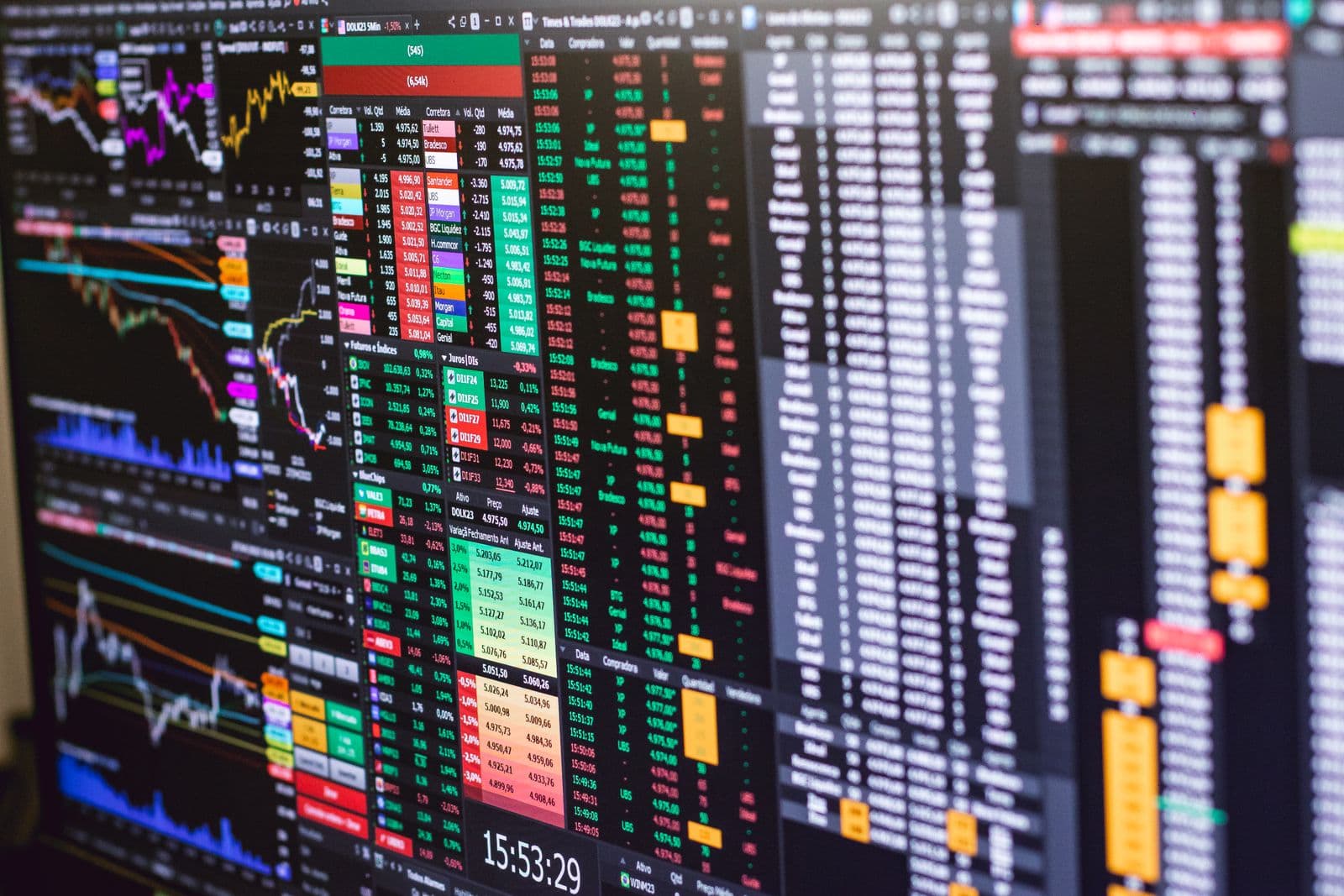
- The consequences are financial and often irreversible. A misread research summary costs you an hour. A wrong input in a model that drives a pricing, hiring or funding decision costs considerably more, and the cost lands well after the moment the error could have been caught.
- Errors compound silently. A financial model is a chain of dependencies. One wrong assumption near the top does not produce an obviously wrong output — it produces a plausible one, and every number downstream inherits the error without any visible discontinuity.
- Accountability does not transfer. "The AI calculated it" is not an answer to a board, an auditor, a lender or a regulator. A named person is accountable for financial output regardless of what produced the first draft, which means that person has to have actually checked it, which means the review cost was never removed.
- Verification requires the same expertise as the original work. Unlike web search, where anyone can open a link, checking a financial analysis needs a qualified analyst — so the tool cannot reduce the cost of the review it depends on.
What it is genuinely good at
None of which makes it useless. Data gathering across scattered sources is real work that AI does well. Extracting figures from statements, invoices and contracts is a strong use case specifically because every extracted value can be reconciled against a source — the verification is cheap and mechanical. First-pass variance commentary is useful: the model drafts an explanation of why a line moved, and the analyst corrects it, which is faster than writing from scratch. Anomaly flagging works because a flag is a prompt to look, not a conclusion.
What it should never be trusted with alone: producing the numbers in anything anyone will act on, setting the assumptions in a model, judging whether a variance is a problem, or writing anything that goes to an external party without a qualified person having checked the arithmetic and the reasoning. The dividing line is consistent — AI on the inputs and the prose, humans on the assumptions and the conclusion.
AI legal assistant — least verifiable, highest consequence
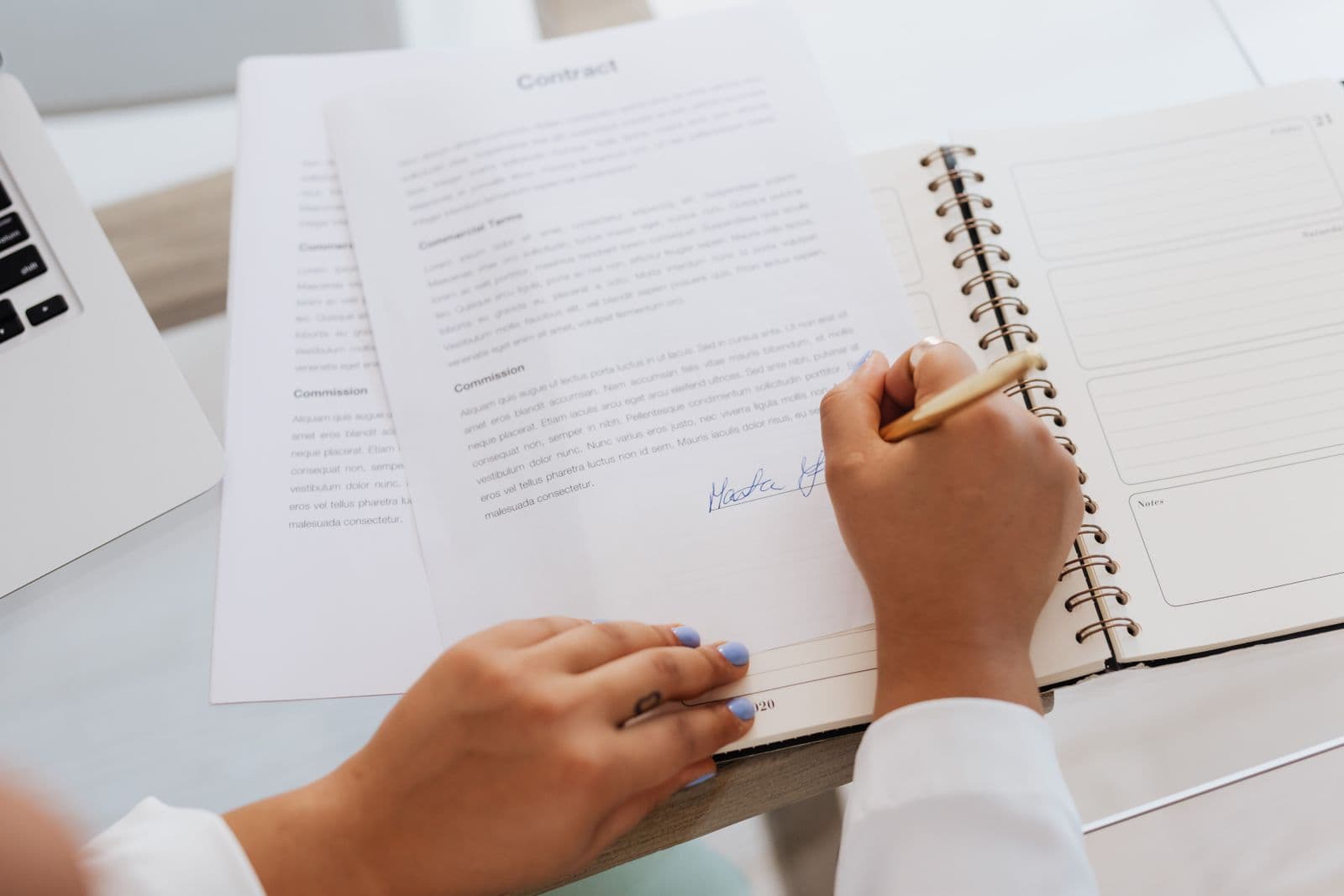
Legal is the far end of the spectrum. It combines the highest cost of being wrong with the highest cost of finding out whether you are wrong, because verification here does not mean opening a link or re-running a query — it means a qualified lawyer reading the document. Nothing in this section is legal advice, and the practical point is that nothing an AI legal assistant produces is either.
The legitimate assistive uses
There is real value here and it is worth naming precisely, because dismissing the category entirely is as unhelpful as overselling it. Clause extraction across a stack of agreements — find every termination provision, every liability cap, every auto-renewal date — turns a multi-day manual exercise into a review of a structured list. First-pass summarization of a long agreement gives a non-lawyer enough orientation to ask better questions. Comparison against a known template surfaces where a counterparty redlined away from your standard position. Each of these produces a starting point for a person, and each is checkable against the underlying document.
Where it stops
What none of that includes is judgment. Whether a clause is acceptable, whether a limitation is enforceable in your jurisdiction, whether an unusual term is a red flag or standard practice in your sector, what a document does not say and should — these are the questions that require a qualified lawyer, and they are the questions that actually determine whether a contract protects you. An extraction tool that finds every liability cap has told you where they are. It has not told you whether yours is reasonable.
And the economic argument deserves stating directly, because it is usually the real motivation. A business that relies on AI legal output without qualified review has not saved money. It has moved the cost to later, into a dispute, a renegotiation or an obligation nobody realized was there — and costs that move later reliably get larger. The saving that is genuinely available is different and smaller: reducing the hours a lawyer spends on locating and organizing material, so that their time goes to the judgment you are actually paying for.
How to actually verify AI research output
"Be careful" is not a procedure. This is one, and it is deliberately selective — verifying everything defeats the purpose of using the tool, while verifying nothing defeats the point of the output. The discipline is knowing which claims are load-bearing.
- Identify the load-bearing claims first. Read the output and mark every sentence a decision would actually rest on. In most research output that is three to six sentences out of several pages. Everything else is context and can be spot-checked.
- Open the source for each one and find the passage. Not the homepage, not the abstract, not the link preview — the specific sentence or table the claim rests on. If you cannot find it, the claim does not survive, no matter how reasonable it sounds.
- Check that the qualifiers survived. Compare scope, population, time period and certainty between the source and the summary. This is where most honest-looking errors live: a real finding stripped of the conditions that made it true.
- Check the date on every source. Stale material is the most common invisible failure, because an outdated fact reads exactly like a current one and nothing in the summary flags the year.
- Check for source independence. If three citations support one claim, confirm they are three sources rather than three pages repeating one original. Corroboration that collapses to a single origin is not corroboration.
- Reconcile every number against the system that owns it. Any figure about your own business gets checked against the source system, not against another document that also quotes it.
- Have a qualified person review anything in a regulated or consequential domain. Financial, legal, medical, safety — the review is not optional and it is not a formality, and if you cannot afford it you cannot afford to publish the output.
- Record what was verified and by whom. Six weeks later, nobody remembers which claims were checked, and an unmarked document gets treated as fully verified by default.
Where that review sits in the process is a design decision rather than an afterthought, and it is the same decision covered in the human-in-the-loop framework — the checkpoint is placed by consequence, not by how complex the task looks. Research output is the clearest case for that rule, because the work looks effortless and the downside of being wrong is entirely invisible at the moment of publication.
Where this breaks in practice
- Verification decays under deadline. The check happens for the first month, then the output keeps being right, then it stops being checked — and the first uncaught error arrives with no one having noticed the habit lapsed. This is the single most common failure and it is a process problem, not a technology problem.
- Fluency is read as confidence. Research output has no visible uncertainty. A shaky inference and a well-established fact arrive in the same register, and readers calibrate on the writing quality because there is nothing else to calibrate on.
- The summary becomes the artifact. Someone pastes the AI paragraph into a deck, the deck circulates, and by the third meeting the claim has been repeated enough that nobody thinks to check where it came from. Provenance is lost in one copy-paste and never recovered.
- Extracted values are never reconciled. Document extraction is the safest financial use case only because reconciliation is cheap. Teams skip the reconciliation because the extraction looks obviously correct, which removes the only property that made it safe.
- The tool gets used outside its competence because the interface does not object. Ask an AI research assistant a legal question and it will answer in the same tone it used for the market overview. Nothing in the product tells you that you have crossed into a domain where you needed a professional.
How to measure whether it is working
The obvious metric for a research tool is time saved, and it is the metric that lies. Time saved goes up when people stop verifying — the fastest possible research process is one where nothing is checked at all. Measured on its own, degradation and improvement look identical.
| What people measure | What it hides | The second number to track |
|---|---|---|
| Time saved per research task | Time drops fastest when verification is skipped | Share of load-bearing claims verified to source, by sampled audit |
| Reports produced per month | Says nothing about whether the figures were correct | Corrections issued after a report was circulated |
| Volume of documents processed | Extraction throughput is not extraction accuracy | Discrepancy rate found during reconciliation against source systems |
The right-hand column requires someone to deliberately go looking, which is why it is almost never in place. A monthly audit of a small random sample — pull five claims from recent output and trace each to source — costs under an hour and is the only honest read on whether the process is still working. The same argument for keeping a deliberate review layer applies here as in the post on what should stay human-reviewed: the review step is the first thing removed under pressure and the thing that was holding the whole system together.
A realistic rollout sequence
- Start with AI web search for background gathering, with an explicit rule that nothing gets quoted or cited without the source being opened. This builds the verification habit while the cost of an error is still low.
- Add an AI research assistant for gathering and first-pass reading on questions where a person in the business already has the domain knowledge to judge the sources. Do not deploy it into a domain where nobody internally can assess credibility.
- Fix your metric definitions and system access before touching report generation. One owning system per metric, one agreed definition, programmatic access. This step is unglamorous, takes longer than expected, and determines everything after it.
- Build the report generator so that every figure comes from a query and the model only writes prose. Run it in parallel with the manual report for at least two full cycles and reconcile them line by line before retiring the manual version.
- Introduce document extraction on the financial side with mandatory reconciliation on every extracted value. Keep the reconciliation permanently — it is not a pilot-phase control, it is the control that makes the use case safe.
- Approach legal last, scoped to extraction, location and first-pass summarization, with qualified review as a fixed part of the workflow rather than a step someone can decide to skip.
The sequence is ordered by verification cost, cheapest first, on purpose. Each stage builds the checking habit at a level where mistakes are survivable, which is the only preparation that transfers to the stages where they are not.
Where to go from here
Take the most recent piece of AI-assisted research anyone in the business acted on. Find the three claims the decision actually rested on, and trace each one to its source — not to a link, to a passage. What that exercise turns up is usually the whole argument for putting a real verification procedure in place, and it takes about twenty minutes. I build and run these systems through Arcetis, and the pattern holds across every deployment: the tools are worth adopting exactly to the extent that someone can cheaply prove they were right.
Frequently asked questions
Can I trust an AI research assistant to do my research for me?
You can trust it to gather and read faster than you can, and you cannot trust it to judge which sources deserve weight. That judgment is the actual work of research. An AI research assistant will summarize three weak sources with exactly the same fluency and confidence it applies to three strong ones, and nothing in the output signals the difference. Use it to collect and compress; keep the credibility assessment with a person who knows the field.
Is AI web search accurate?
It is accurate often enough to be useful and wrong often enough that unchecked use is a real risk. The important thing is that it is the most checkable AI output there is, because it links to the pages it drew from. The common failure is not a fabricated source but a real source that does not actually support the sentence attached to it, which only shows up if you open the link and read the relevant passage rather than trusting the summary.
Can AI write my board report or investor update?
It can write the narrative around figures that came from your systems, and it should never be the thing that produces the figures. Query the system of record for every number, put those numbers into the prompt as given facts, and let the model handle the sentences that explain them. The moment a model is reading a number off a document and restating it, you have introduced an error class that reviewers are very poorly equipped to catch.
Can an AI financial analyst replace a human analyst?
No. The consequences of a financial error are financial, mistakes compound silently through a model until the output is confidently wrong, and accountability cannot be assigned to software. What AI does well in finance is the surrounding work: gathering data, extracting figures from documents for a human to reconcile, drafting first-pass variance commentary, and flagging anomalies for review. The analysis, the assumptions and the sign-off stay with a qualified person.
Is it safe to use an AI legal assistant for contract review?
It is safe as a first pass and unsafe as a conclusion. Extracting clauses, locating the termination and liability language across a stack of agreements, and summarizing what a document appears to say are legitimate uses that save real hours. Deciding whether a term is acceptable, enforceable or unusual in context requires a qualified lawyer. Nothing produced by an AI legal assistant is legal advice, and treating it as such moves risk forward rather than removing it.
Does a citation prove that an AI answer is correct?
No, and this is the most consistently misunderstood point about AI research output. A citation proves a page exists and was retrieved. It does not prove the page contains the claim, supports the claim, or is a credible source for the claim. Checking that a link resolves is not verification. Verification means opening the source and finding the specific passage the sentence rests on, which is a slower and much less common habit.
How do I verify AI research output without redoing all the work?
Verify selectively rather than exhaustively. Identify the load-bearing claims — the ones a decision actually rests on — and check those to source, reading the passage rather than the summary. Confirm every number against the system that owns it. Check publication dates, because stale sources are a frequent and invisible failure. Everything that is context rather than a decision input can be spot-checked. Full re-verification defeats the purpose; unverified load-bearing claims defeat the point.
Which AI research use case is safest to start with?
AI web search for background gathering, followed by document extraction where every extracted value is reconciled against a source system. Both give you a cheap, immediate way to check the output, which is the property that makes a research tool safe to adopt. The categories to approach last are the ones where verification requires a qualified professional — financial analysis and anything legal — because there the tool cannot reduce the cost of the review it depends on.
Book a free 10-minute consultation
Sapun Lamichhane is a business growth analyst and founder of Arcetis, based in Pokhara, Nepal. If you want a second opinion on your account, your funnel, or whether a channel is worth your budget at all, book a free 10-minute call — no pitch, and a straight answer even when the answer is that you do not need help.
Direct: +977 9846162626 · lamichhanesapun2@gmail.com
This post supports the frameworks documented in full on the Authority page.