Google Ads in Nepal: The Complete 2026 Guide
Key takeaways
- The constraint that decides everything else is Nepali foreign-exchange regulation, not Google. Advertising bought abroad is treated as an import of services, must go through banking channels, and is capped by annual foreign-currency ceilings.
- Those ceilings changed on 7 April 2026 with Nepal Rastra Bank’s Unified Circular-2082. Almost every guide published before that date describes limits that have since been raised, particularly for IT and forex-earning businesses.
- Google Merchant Center, Shopping ads, free product listings, call reporting, Google forwarding numbers and lead form assets are all unavailable for Nepal, while India, Pakistan, Bangladesh and Sri Lanka have several of them. Most "Google Ads in South Asia" advice is India advice.
- Nepali is not a supported ad-targeting language in Google Ads, and Google states that ads in unsupported languages will be disapproved. Geographic targeting of Nepal, on the other hand, is granular down to municipality level across 114 active targets.
- No credible published CPC or conversion benchmark exists for Nepal. Every Nepali cost figure in circulation traces back to Keyword Planner estimates or to an uncited blog post. Use Keyword Planner forecasts and your own account data, and label them as what they are.
The short answer
Most of what makes Google Ads in Nepal different has nothing to do with campaign settings. Four things do the work. First, foreign ad spend is treated under Nepali law as an import of services — it has to move through formal banking channels and it sits under annual foreign-currency ceilings that, for an individual using the standard prepaid dollar card, amount to roughly USD 42 of media per month. Second, those ceilings changed on 7 April 2026, which means most of what is published about paying for ads from Nepal is out of date. Third, several Google Ads features are simply not available for Nepal — Merchant Center and Shopping, call reporting and forwarding numbers, and lead form assets — while India and in some cases Pakistan, Bangladesh and Sri Lanka have them, so most "South Asia" advice does not transfer. Fourth, Nepali is not a supported ad-targeting language, and Google states that ads in unsupported languages are disapproved.
Everything else — auction mechanics, match types, Quality Score, bidding — works the way it works everywhere. That is why this guide spends almost no time on it and a great deal of time on payment, tax, feature availability and measurement. If you want the universal parts done properly, the rest of this blog covers them at length. What follows is the part that is specific to running an account from Kathmandu, Pokhara or Biratnagar.
Read this before any older guide
Nepal Rastra Bank replaced its Unified Foreign Exchange Circular on 7 April 2026 (Unified Circular-2082, superseding Unified Circular-2081 of 4 April 2025). The service-payment and prepaid-card ceilings moved, materially so for IT and foreign-currency-earning businesses. Any article about paying for Google Ads from Nepal that predates April 2026 — which is nearly all of them — should be treated as describing a superseded regime.
One more thing before the substance, because it governs how you should read this. My own operating experience is cross-market: I have managed more than USD 170,000 in Google and Meta ad spend across seven-plus countries, and the large majority of that was outside Nepal — India, Australia, the United States and elsewhere. So I am not going to tell you what a plumbing keyword costs in Kathmandu, because I do not have that data and neither does anybody publishing it. What I can do is tell you precisely which parts of the platform behave differently here, sourced to Google’s own country lists and to Nepal Rastra Bank’s circulars, and how a practitioner should reason about the gaps.
Before anything else: can you actually pay?
Every other decision in a Nepali Google Ads account is downstream of this one, and it is the section nearly every competing guide skips or gets wrong. The question is not whether Google will accept your money. It is whether Nepali foreign-exchange regulation will let the money leave, in what amount, and through which instrument.
Ad spend abroad is an import of services
This is the framing that makes the rest of it make sense. Nepal Rastra Bank treats payment to a foreign platform for advertising as a service import — the same category as buying software or professional services from abroad. That has three consequences: it must go through formal banking channels, it must be documented, and it is subject to annual limits set by the central bank rather than by your appetite for growth.
The principle is not new. Reporting in The Kathmandu Post in February 2020 quoted Guru Prasad Poudel, then director of NRB’s foreign exchange management department, describing social media ad payments as service imports, permitted provided advertisers produce signed agreements and pay their taxes, and recorded an NRB circular of 1 February 2020 stating that any payment made outside the banking channels for social media advertisements is considered against foreign exchange regulation law. That article is six years old and its numeric thresholds are long superseded, but the underlying treatment has not changed: the money goes through a bank, with paperwork, or it does not go.
I want to be exact about what that means for this guide. This section describes routes that exist and are documented. It does not describe ways around the ceiling, because there is nothing useful to say there and a great deal to lose. If your intended spend exceeds what your route permits, the answer is a different route with a higher documented limit, applied for properly — not a clever arrangement.

The prepaid dollar card, and the number that actually binds
Nepali commercial banks issue prepaid USD cards for online purchases abroad, and several market them by name for exactly this purpose. Global IME Bank’s own page describes its ECOM prepaid card as the way to pay Google Ads and Facebook Ads, states that it is a USD card, and lists the requirements: PAN certificate, citizenship or passport, and a Nepal billing address, with issuance through the app or a branch. A Nepali agency roundup from Gurkha Technology in April 2025 lists six issuers offering physical and virtual variants — Prabhu Bank, Nepal Bank Limited, Everest Bank, Laxmi Sunrise Bank, NMB Bank and Global IME Bank.
The ceiling on that card is the number that decides most Nepali advertising plans. Global IME states an annual limit of USD 500 per year, attributing it to NRB guidance. NMB Bank’s application form is literally titled as an issuance under an NRB directive for USD 500 per year. Vidhi Legal traces the rule to an NRB circular of March 2021 and adds the conditions that go with it: online purchases only, no cash withdrawal, no capital transactions, one card per user across all banks, and purchase proof required — with people earning foreign income able to go up to the sum of that income plus USD 500, capped at USD 5,000.
All three of those sources predate April 2026, and I could not confirm from NRB directly that the USD 500 figure survived the new circular unchanged. Treat it as the limit Nepali banks commonly apply rather than as verified current black-letter regulation, and confirm it with your own bank. But do the arithmetic anyway, because it reframes the whole topic: USD 500 a year is about USD 42 a month of media. That is not a budget. It is a test account. Nepali sources routinely describe it as "enough for many small and mid-sized businesses," which is marketing framing, not an operational statement.
What the April 2026 circular changed
NRB’s Foreign Exchange Management Department issued एकीकृत परिपत्र–२०८२ (Unified Circular-2082), circular number 11/2082–83, dated 7 April 2026, superseding Unified Circular-2081 of 4 April 2025. Both are listed on NRB’s own circular archive, which is where I confirmed the document and its date. The Nepali-language PDF body itself is served through client-side script and I was not able to extract it, so the specific limits below come from a professional-firm reading of the amendment, not from my own reading of the circular text. Name the source when you repeat them.
That source is PKF TR Upadhya and Co., a Kathmandu member firm of PKF International, in a flash alert dated 8 April 2026 summarizing NRB Circular 10/2082-83 of 6 April 2026 amending the Unified Forex Directive. It is a client alert, not a regulator publication — authoritative-adjacent, and worth having a Nepali chartered accountant confirm before you plan a budget around any single line of it.
| Route | Annual limit | Source and date |
|---|---|---|
| Individual prepaid USD card, one card per user across all banks | USD 500 | As commonly applied by Nepali banks: Global IME Bank (June 2025), NMB Bank application form (February 2024), traced by Vidhi Legal to an NRB circular of March 2021. Predates the April 2026 circular. |
| Prepaid card for IT and communication industries, online software and service purchases | USD 3,000 | PKF TR Upadhya and Co. flash alert, 8 April 2026, reading NRB’s amendment to the Unified Forex Circular |
| The same, where the industry earns foreign currency through service exports | USD 5,000 | PKF TR Upadhya and Co., 8 April 2026 |
| Invisible imports and IT service purchases by foreign-currency-earning IT businesses, via banking channel | USD 100,000 | PKF TR Upadhya and Co., 8 April 2026 |
| General annual payment limit for other services, via banking channel | USD 50,000 | PKF TR Upadhya and Co., 8 April 2026 |
| Nepali citizens earning foreign currency online, paying for IT services | USD 25,000 | PKF TR Upadhya and Co., 8 April 2026 |
Read that table for its shape rather than its individual rows. The shape is that Nepal now draws a sharp line between a private individual buying something online and a registered business — particularly an IT or ICT business, and particularly one that earns foreign currency through service exports — buying an input through the banking channel. The individual is capped at a level that will not fund a serious campaign. The forex-earning IT business is not. If you are a Nepali company planning to advertise abroad at any scale, the practical work is establishing which of those categories you are in and what documentation your bank requires, before you write a media plan.
How I fund accounts, stated as one route among several
For my own accounts I use a USD-denominated card drawn on a foreign-currency account holding earnings received from abroad for services exported — not an NPR retail card. That is what I do and have done; it is not a recommendation, a claim about what any Nepali business is permitted to do, or a statement about what your bank will approve. It works for me because the underlying account holds service-export earnings, which is a specific circumstance, not a general one.
The other arrangement worth naming, because agencies deal with it constantly, is that the client holds the payment instrument and is the advertiser of record, paying from their own account. That is ordinary practice, and Gurkha Technology explicitly recommends it over routing payment through an agency’s international vendor network, on the grounds that the vendor route adds commissions and VAT and reduces transparency for the client. It also means the client’s own limits and documentation apply, which is the correct place for them to sit.
Beyond that, I have nothing to offer, deliberately. Any specific arrangement should be confirmed with your bank and a Nepali chartered accountant against your own registration status and earnings profile. A guide that reads as regulatory-workaround advice is a liability for everyone who follows it.
What I could not verify about billing, and will not guess
Two things are commonly asserted online that I could not confirm from Google, so this guide will not assert them either. The first is which payment methods Google actually offers for a Nepal billing address. Google’s canonical answer is its Payment Methods and Terms of Service Finder, which the payment-methods help article points to as the per-country authority — and it is a client-side application whose Nepal variant cannot be read without running it. Open it yourself with Nepal selected and your intended currency. That is the only reliable answer.
The second is whether NPR is selectable as a Google Ads account currency for a Nepal billing address. Sources contradict each other flatly: one Nepali SEO guide claims campaigns can be paid in Nepalese rupees directly, with no citation; Global IME Bank, an actual licensed bank, markets its ad-paying card as a USD card. Google’s own documentation says only that currency options depend on country of registration, that in some countries only certain currencies can be used, and — importantly — that currency cannot be changed after account creation. What can be said honestly is that the practical Nepali payment rails are USD-denominated regardless of what the account displays. Check the finder before you create the account, because you do not get a second attempt at that setting.
Monthly invoicing is a third unknown. Google publishes eligibility requirements — a business registered at least a year, an account in good standing for six months, and spend of at least USD 5,000 a month in three of the last twelve — but publishes no country list, and Nepal is not mentioned either way. Note that the spend requirement collides directly with the foreign-exchange ceilings above for most local advertisers, which makes the question academic for the majority of Nepali accounts.
What Nepal actually costs you in tax
This section carries more hedging than any other, and the hedging is the point. Google’s own tax documentation does not cover Nepal at all: its "Taxes in your country" page enumerates named countries — in Asia-Pacific it lists Taiwan, China, Cambodia, Malaysia, Bangladesh, Singapore, Thailand, Indonesia, Pakistan, Australia, Japan and India — and Nepal is not among them. Contrast that with Meta, which does maintain a Nepal-specific VAT page. So there is no Google-published answer to point at, and anyone who tells you otherwise is inventing it.
The 13 percent reverse charge is the obligation that lands on you
Section 8(2) of the Value Added Tax Act, 2052 provides that a person in Nepal, whether registered or not, who receives a service from a person outside Nepal shall pay VAT on that service. Because a foreign supplier cannot issue a Nepali VAT invoice, the recipient self-assesses and remits, at the earlier of receiving the service or paying for it. Applied to Google Ads, the reading commonly given by Nepali practitioners is that the advertiser owes 13 percent VAT on the value of the imported advertising service under the reverse-charge mechanism.
For a fully VAT-able business the reverse-charge VAT is normally recoverable as input credit in the same period, so the net cash cost is typically nil. The filing obligation, however, is entirely real, and auditors check it. This is one of the more common quiet failures in Nepali accounts: the ads run, the card is charged, and nobody books the reverse charge because the platform never issued anything that looks like a Nepali tax document. State it plainly to whoever does your books before the first invoice, not at year end.
Digital Service Tax is 2 percent, is not yours, and probably does not apply to you
Nepal’s Digital Service Tax was introduced by the Finance Act 2079/80 at 2 percent of transaction value, levied on non-residents supplying digital services to consumers in Nepal above an annual threshold. Two features of it are routinely misreported. It is levied on the non-resident supplier, not on the Nepali buyer — it is Google’s liability, not the advertiser’s. And the definition of "consumer" excludes persons acquiring the service for business purposes, which makes the regime B2C only, with B2B out of scope. A Nepali business buying advertising is therefore not the target of DST. Both points come from EY’s tax alert of 28 August 2023 and from NBSM, a Nepali accounting firm, in July 2022; NBSM also notes that the 2 percent applies to transaction value excluding Nepali indirect tax, so VAT on the imported service is outside the DST base.
The threshold is where the published sources disagree, and I am going to show you the disagreement rather than pick a side. EY and NBSM both state NPR 2 million per income year. Global VAT Compliance and vatcalc both report NPR 3 million, described as an increase from NPR 2 million, in the context of the 2024 Digital Service Tax procedures. I could not resolve which is current from a Nepali primary source. If the threshold matters to your position — which it will only if you are the supplier, not the advertiser — get it confirmed by a Nepali CA rather than trusting either number here.
Withholding tax: genuinely unresolved, and I will not pretend otherwise
The 15 percent withholding rate on payments to non-residents for services under the Income Tax Act 2058 is widely cited, and search results assert freely that it applies to Google Ads payments in addition to and separately from the reverse-charge VAT on the same payment. I could not verify from a primary Inland Revenue Department source that withholding is applied to advertising remittances specifically, and there is real practitioner disagreement: some banks deduct at source on the outbound remittance and some do not.
So this guide does not take a TDS position. What it tells you instead is that the treatment varies by bank, that it is worth asking your bank explicitly what it will deduct on an outbound advertising remittance before you plan the spend, and that the answer should come from a Nepali chartered accountant looking at your actual registration and payment route. Everything else you will read on this online is someone repeating a plausible-sounding rate.
Do not repeat these
Two claims circulate about Nepali Google Ads tax that I found no evidence for: that Google issues Nepali VAT invoices, and that Google charges Nepal VAT at checkout. Google’s tax-by-country page omits Nepal entirely, and no Nepal-specific Google tax documentation exists. If your accountant is waiting for a Nepali tax invoice from Google before booking the reverse charge, that wait may not end.
The features Nepal does not get
This is the most useful section in the guide and the one with the least competition, because it consists entirely of checkable facts that almost nobody writing about Nepal has checked. Google publishes machine-readable country lists for several features. Nepal is missing from three of them. These are not opinions about what works badly in Nepal; they are absences from Google’s own documentation, and each one invalidates a chunk of otherwise-sensible advice.
| Feature | Available for Nepal? | What to do instead |
|---|---|---|
| Merchant Center, Shopping ads, free product listings | No. Nepal does not appear on Google’s supported countries and currencies list for Merchant Center. Neither do Pakistan, Bangladesh or Sri Lanka; India is the only South Asian country listed. | Sell through Search and Demand Gen with strong product landing pages. Treat feed-based retail advertising as unavailable and plan the account around intent capture instead. |
| Retail-goal Performance Max | Not workable, since it depends on Merchant Center. This is an inference from the feed dependency, not a Google statement. | Run asset-based Performance Max against a lead or purchase conversion goal, with no feed. Google documents the feed as optional for PMax. |
| Call reporting and Google forwarding numbers | No. Google publishes the eligible-country list and Nepal is not on it. India and Indonesia are. | A call asset with your own number still serves. Measure calls with a third-party call tracking provider, or with a distinct number per channel reconciled manually. |
| Lead form assets | No. The eligible list runs to 85 countries and includes Bangladesh, India, Pakistan and Sri Lanka, but not Nepal. | Send traffic to your own landing page and form. This is better practice anyway, since the data lands in your systems rather than in a Google export. |
| Nepali as an ad-targeting language | No. Google’s language-targeting table lists 51 languages; Nepali is absent while Hindi, Bengali, Urdu, Tamil, Telugu and others are present. | Target Nepal geographically and set language targeting to English. Ads written in an unsupported language carry a disapproval risk. |
| Google Ads interface in Nepali | No. Nepali is absent from the interface-language table, and Nepali-locale help pages fall back to English while Hindi-locale pages return translated content. | Plan for an English-language operating environment, including for any Nepali staff you train on the account. |
| Geographic targeting of Nepal | Yes, and granular. Google’s geo-targets file dated 6 July 2026 contains 114 active Nepal targets: the country, five provinces, five legacy development regions, districts, cities and around eighty municipalities. | Target nationally, by province, or by individual municipality. Kathmandu, Lalitpur, Biratnagar, Butwal, Hetauda, Damak, Nepalgunj, Rajbiraj and Birendranagar are all named targets. |
| Google Business Profile | Yes. Nepal appears on the official supported countries and regions list. | Location assets and local presence work normally. For a service business this is often the highest-return unpaid asset attached to the account. |
No Merchant Center means Nepal is not a retail-feed market
For an online retailer this is the single most consequential fact in the guide. Shopping ads and free product listings both sit on top of Merchant Center, and Merchant Center does not list Nepal among supported countries. So the standard e-commerce Google Ads playbook — get the feed clean, run Shopping, layer Performance Max on the feed, fix the product titles — is not available to a Nepal-based merchant. That playbook is what perhaps half of all Google Ads content on the internet is about.
What replaces it is less elegant and more work. Product and category demand has to be captured through Search campaigns against commercial-intent keywords, which means the keyword and negative work matters far more than it would in a feed market, since you have no feed to constrain matching. Demand Gen has to carry the discovery load that Shopping and free listings would otherwise carry. And the landing pages have to do the merchandising job that the Shopping unit does elsewhere — image, price, availability and delivery all visible without a scroll — because the ad cannot show any of it.
No call reporting is a measurement problem, not a serving problem
Get the nuance right here, because it is easy to overstate. You can still attach a call asset with your own phone number to an ad in Nepal, and it will serve. What you do not get is the Google forwarding number that substitutes for your number, the resulting call counts, and call-duration conversions. So calls generated by Google Ads in Nepal cannot be measured natively at all.
In a market where a large share of enquiries arrive as a phone call — and for Nepali service businesses that is normal, not exceptional — this means the conversion data in the account systematically under-counts the outcome the campaign is producing. Smart bidding then optimizes toward whatever it can see, which is form fills and page events, and away from the channel actually generating revenue. That is a structurally dangerous configuration, and it is the reason the tracking section below is longer than it would be for almost any other country.
No lead form assets, with a second gate behind them
Google states plainly that lead forms are only eligible to serve in some countries, and that an audience in a country that does not allow them will not see the form. The eligible list runs to 85 countries and includes Bangladesh, India, Pakistan and Sri Lanka. Nepal is the South Asian outlier. In-ad lead capture is therefore off the table and traffic has to reach your own form.
Even if Nepal were added tomorrow, a second gate would still bind for most local advertisers: the same documentation sets lifetime-spend requirements for lead forms on video and display, and for a lead form on a Search headline, of over USD 50,000 in lifetime Google Ads spend, with a lower reputable-advertiser path at USD 1,000 per account or USD 15,000 across accounts subject to verification. Set that against the foreign-exchange ceilings in the previous section and the feature is out of reach twice over for a typical Nepali budget.
Language: Nepali is not a targeting option, and that has teeth
I checked this two ways because the consequence is severe. Google’s Ads API documentation publishes a table of languages available for targeting with their codes and criterion IDs; it contains 51 languages and Nepali is not one of them. The Google Ads Help page on available languages carries the same 51-language table with separate columns for interface availability and ad language targeting, and Nepali is absent from it entirely. Meanwhile Bengali, Gujarati, Hindi, Kannada, Malayalam, Marathi, Punjabi, Tamil, Telugu and Urdu are all supported — every South Asian language on the list is Indian or Pakistani.
The consequence is stated by Google itself, on its language targeting documentation: ads created in a language that is not supported for ads language targeting will be disapproved. Read that carefully. It is not that Nepali ads perform worse, or that targeting is imprecise. It is that Devanagari-script Nepali ad copy carries a disapproval risk, and there is no Nepali option in the language targeting control at all.
What practitioners do about it is target Nepal geographically and set language targeting to English, sometimes adding Hindi. I want to be explicit that this is inference and common practice, not documented Google guidance — Google does not publish a recommended approach for languages it does not support. Test it in your own account, watch disapprovals, and do not build a campaign structure that assumes Nepali-language creative will survive review.
There is a strategic reading of this that is worth sitting with. Language targeting in Google Ads is based on the user’s interface and content language settings, not on the language of your ad, so English targeting in Nepal reaches people whose Google experience is in English — which, given that the Google Ads interface, the help center and Google’s Nepali-locale pages all fall back to English, is a substantial share of the commercially active audience. It does mean that the segment of the market that searches and browses primarily in Nepali is harder to reach deliberately, and that is a real limitation, not a solved problem.
Support is English-only too
Related and worth knowing before you need it. Google’s ads expert support page carries a country selector covering more than twenty markets including India, Indonesia, Thailand and Vietnam; Nepal is not listed. There is no Nepal-localized Google Ads site — the India and UK locale paths resolve to country-specific sites, while the Nepal locale path falls back to the generic global page. And the Google Ads interface is not available in Nepali. I could not enumerate exactly which support channels a Nepal-billing account is offered, because that requires signing into one.
One firm instruction: do not trust a "Google Ads Nepal support phone number" from a third-party site. No such number is verifiable from any Google source, and several of the numbers in circulation are lead-generation bait for agencies. Support for a Nepal account runs through the account itself.
Account setup for a Nepali advertiser
Setup is where the irreversible decisions live. Most of a Google Ads account can be restructured later at the cost of some learning data. Two things cannot, and both bite Nepali advertisers specifically.
Currency, which you get one attempt at
Google states that currency options depend on the country of registration, that in some countries only certain currencies can be used, and that the account currency cannot be changed after creation. That last part is the one people discover too late. Since I could not verify whether NPR is offered for a Nepal billing address, and since the practical funding rails are USD-denominated, the sequence to follow is: check Google’s payment methods finder with Nepal selected before you create anything, confirm with your bank what currency your intended payment instrument settles in, and only then create the account. If your card is a USD prepaid card and your account is denominated in something else, you are adding a conversion spread to every charge for the life of the account.
Advertiser identity verification, with a Nepal-specific document list
This is one of very few pieces of genuinely Nepal-specific Google documentation that exists, and it is worth preparing for rather than being surprised by. Google runs advertiser verification in Nepal and publishes the accepted documents.
- For organizations: a certificate of incorporation or registration, an extract from the commercial register, or a VAT/PAN registration certificate. Government departments may instead supply an official letter carrying full name, address and date.
- For the authorized representative of an organization: a passport, identification card, driving license or permanent residence card.
- For individuals: a Nepali government-issued photo ID — passport, National Identity Card, Citizenship Certificate, Election Commission Voter ID, PAN Card, driver’s license or residence permit.
- Formal requirements that cause most rejections: the documents must exactly match the payments profile, and photo IDs must be valid, in color, clear and well lit. Photocopies and screenshots are rejected.
The failure mode here is mundane and costs weeks. A business registers the Google account against a slightly different legal name or address than the one on the PAN certificate, submits the certificate, and the verification bounces without a clear explanation. Reconcile the payments profile against the exact text on the registration document before submitting anything.
Geographic targeting, which is the one thing Nepal has in abundance
Google’s official geo-targets file, in the release dated 6 July 2026, contains 114 active Nepal targets. That is the country itself, five provinces, the five legacy development regions, plus districts, cities, divisions and roughly eighty municipalities. Named targetable places include Kathmandu, Lalitpur, Biratnagar, Butwal, Hetauda, Damak, Nepalgunj, Rajbiraj and Birendranagar. You can target Nepal nationally, province by province, or municipality by municipality.
For a service business with a delivery radius, that granularity is the most valuable structural feature available in a Nepali account, precisely because so many other levers are missing. A Pokhara business that targets Nepal nationally is buying clicks from people it cannot serve, and it has no Shopping unit, no lead form and no call reporting to compensate for the waste. Municipality-level targeting is the cheapest efficiency gain in the account.
Two settings to get right regardless of country, and which matter more here because the recovery mechanisms are weaker. Set location targeting to presence rather than presence-or-interest unless you genuinely want people abroad researching Nepal — for an inbound tourism business you probably do, and for a Kathmandu dental clinic you certainly do not. And check the excluded-locations list as deliberately as the included one.
Who you can actually reach: the audience picture
Before campaign types, a short reality check on the addressable market, because Nepali digital-marketing content is unusually prone to quoting a figure above 100 percent for internet penetration. That figure is real, it is published by the regulator, and it does not mean what it appears to mean.
| Indicator | Figure | Source and reference date |
|---|---|---|
| Internet users | 16.6 million, or 56.0 percent of the population | DataReportal / Kepios, Digital 2026: Nepal, published 8 November 2025, reference date October 2025 |
| Social media user identities | 14.8 million, or 50.0 percent of the population | DataReportal / Kepios, same report |
| Broadband subscriptions | 31.3 million, described as 148.64 percent "population penetration" on a subscription basis | Nepal Telecommunications Authority, Telecommunication Indicators, data as of end of June 2026 |
| Google share of search, all platforms | 95.93 percent, against Bing at 2.99 percent | StatCounter Global Stats, Nepal, June 2026 |
| Google share of search, mobile only | 99.14 percent | StatCounter Global Stats, Nepal, June 2026 |
| Device split | Mobile 62.13 percent, desktop 37.46 percent, tablet 0.41 percent | StatCounter Global Stats, Nepal, June 2026 |
The two internet figures conflict only if you misread them. NTA counts active subscriptions on operator networks; DataReportal estimates unique humans who use the internet. Three separate mechanisms inflate the subscription figure, all visible in NTA’s own document: it counts subscriptions rather than people in a market where multi-SIM ownership is normal; for fixed broadband it multiplies connections by 4.37, the census average household size, converting 3.54 million connections into a notional 15.5 million subscribers; and the denominator is the 2021 census population, now five years old. NTA’s own table header carries the qualifier "based on subscription." The honest sentence is that around 56 percent of Nepalis use the internet while active broadband subscriptions exceed the population, because most users hold multiple SIMs.
What that means for an advertiser is straightforward. The reachable audience is roughly half the country, skewed young — DataReportal puts the median age at 25.3 — and predominantly mobile. Google’s dominance of search is not in doubt: the gap between Google and Bing in Nepal is orders of magnitude larger than any plausible sampling error, even though StatCounter is a page-view sample rather than a census and does not weight its data. Do not quote the decimal places as if they were precise. Do plan mobile-first creative and landing pages, since mobile is where nearly two-thirds of sessions and effectively all of the search share sit.
One caution on the DataReportal numbers: they carry an October 2025 reference date, which makes them around nine months stale at the time of writing, and DataReportal itself warns that published internet-use figures may under-represent current reality. Date-stamp them whenever you use them. And do not go looking for Nepal search-behavior data — searches per user, query volumes, intent mix. No primary source publishes it. Google does not release it by country and NTA does not collect it, so any claim about how many searches Nepalis perform per day should be treated as invented until someone shows you the source.
Campaign types and when each fits
I run Search, Performance Max and Demand Gen as a working repertoire across markets, and add others when a specific job calls for them. What changes in Nepal is not which campaign types exist but what they can do once you remove the feed, the lead form and the call data.
Search
Search is the backbone of a Nepali account, more so than it would be elsewhere, and for a structural reason: it is the only campaign type whose core mechanism is entirely unaffected by anything in the feature-gap table. Someone types a commercial query, you bid on it, they land on your page. Google publishes no country-availability restriction for Search campaigns.
Because Search carries more of the load here, the disciplines that keep Search clean carry more weight too. Match type control and negative keyword hygiene matter more when you have no product feed constraining what a broad match can wander into, and when the missing call data means a chunk of your wasted spend produces no counter-signal at all. The negative keyword list every service business needs is a reasonable starting frame, and in a Nepali account I would treat the search terms report as a weekly obligation rather than a monthly one, because there is less automatic correction happening underneath.
Performance Max, which behaves differently here
This is the paragraph most likely to save a Nepali advertiser money. Performance Max in most markets is understood as a feed-driven retail engine — you connect Merchant Center, PMax spends across Shopping, YouTube, Display, Discover, Gmail and Maps, and the feed does most of the targeting work. That version of PMax is not available to a Nepal-based merchant, because Merchant Center is not available for Nepal.
What is available is asset-based Performance Max: no feed, an asset group of headlines, descriptions, images and video, an audience signal, and a conversion goal. Google documents no country restriction for PMax and confirms that the Merchant Center feed is optional, so lead-generation PMax is workable from Nepal. But understand that you are running a genuinely different product from the one most PMax case studies describe, with less structural information going into it and correspondingly more weight on your asset quality and on the conversion signal you feed it.
Which leads to the honest warning. PMax is only as good as the conversion data it optimizes toward, and Nepal is a market where a significant conversion path — the phone call — cannot be tracked natively. A Nepali PMax campaign optimizing toward form fills while most of the business arrives by phone will confidently allocate budget away from whatever produces calls. If your business runs on calls, either close that measurement gap first or do not run PMax yet. That is not a general reservation about the campaign type; it is a specific consequence of Nepal’s feature set.
Demand Gen
Demand Gen carries the discovery and consideration load in a Nepali account, and it earns more of a place here than it would in a market with free listings and Shopping to do that work. Google publishes no geographic restriction and no account spend threshold for it, only a budget recommendation. Given the audience picture above — young, mobile, heavily social — the surfaces Demand Gen buys are where a large share of Nepali attention actually sits.
One live caveat worth checking against the current documentation rather than trusting this post: Google flagged Display campaigns migrating to Demand Gen for eligible advertisers beginning June 2026, which was mid-rollout as this was written. If you are reading this some distance from July 2026, verify where that landed before planning a Display campaign.
Video
YouTube campaigns work — Nepal is a valid geo target, YouTube operates in Nepal, and Google publishes no country-exclusion list for video. I state that with slightly less confidence than the items in the table above, because the absence of an exclusion list is not the same as an explicit confirmation naming Nepal, and Google publishes no such confirmation. Practically, video is the cheapest way to build the top of a Nepali funnel, and it pairs naturally with the mobile skew in the device data.
What the repertoire looks like in practice
For a Nepali service business I would expect the sequence to be Search first and alone until the conversion data is trustworthy, then Demand Gen for reach once there is something to remarket to, then asset-based Performance Max last — after the tracking is honest, not before. Running all three from day one in a market with this much measurement uncertainty is how budgets disappear without a diagnosis. The ordering logic here is the same one behind the bid governance framework: automation earns scope as the signal quality improves, and not a step earlier.
Conversion tracking in Nepal specifically
Every account needs the standard tracking foundation — a properly configured GA4 and Google Tag Manager setup, deduplicated conversion actions, a clear split between primary and secondary conversions. That work is the same in Nepal as anywhere and the full conversion tracking implementation guide covers it end to end. What follows is only the part Nepal changes.
The gap: calls are invisible
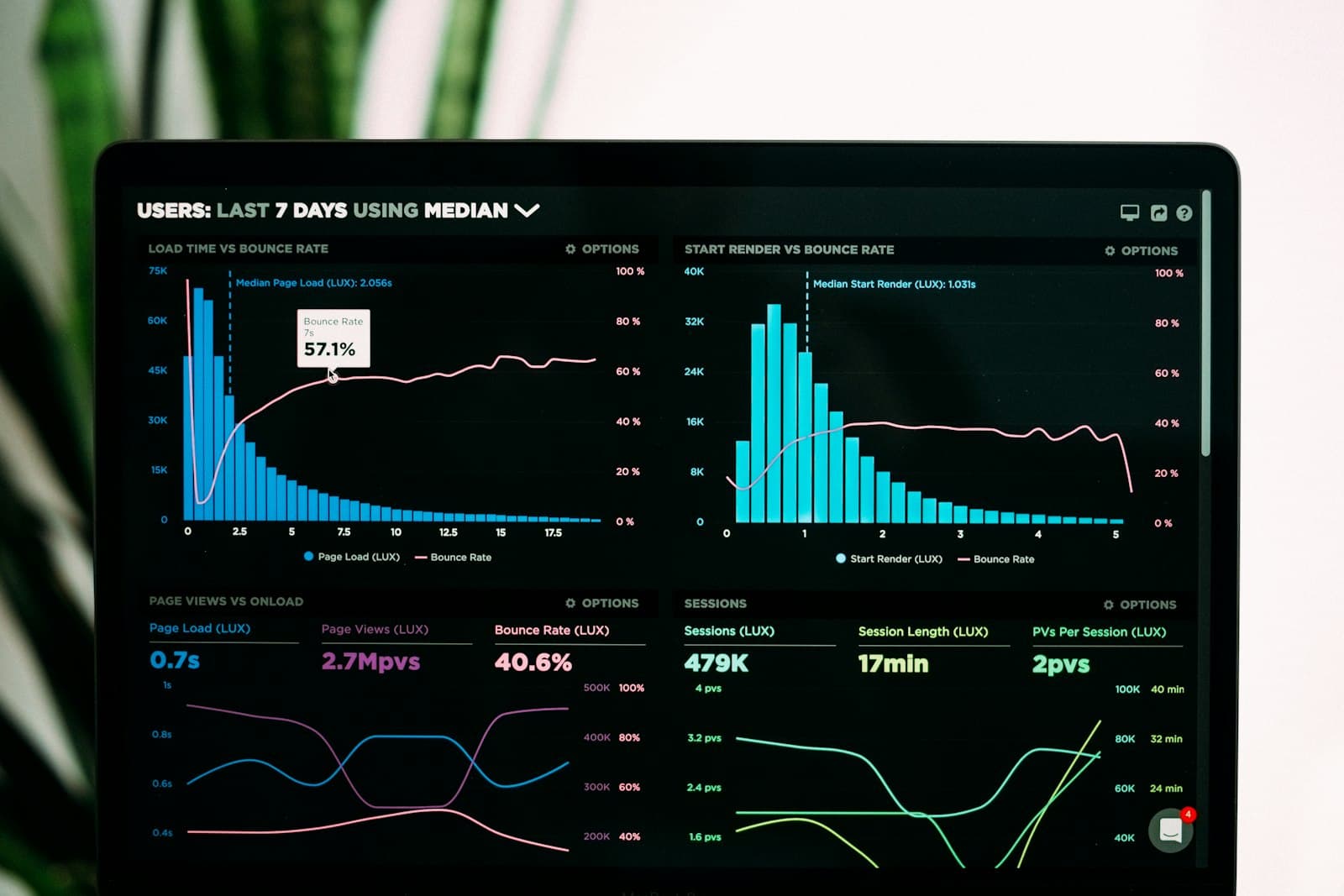
Google publishes the complete list of countries eligible for call reporting and Google forwarding numbers — thirty markets including India, Indonesia, Japan, Israel and South Africa — and Nepal is not on it. So the mechanism that lets you count calls, attribute them to campaigns and keywords, and treat calls over a duration threshold as conversions does not exist here.
Think about what that does to an account. Smart bidding allocates budget toward the conversions it can observe. If half your enquiries arrive as calls and none of them are observable, then every bidding strategy in the account is being trained on a biased sample of your own results. Campaigns and keywords that drive calls look expensive and unproductive; campaigns that drive form fills look efficient. Over a few weeks the system will faithfully move money from the first to the second, and the account will report improving cost per conversion while total business declines. That is the metric that lies in a Nepali account, and it is not a subtle effect.
Closing the gap honestly
- Use a third-party call tracking provider that supports Nepali numbers, with dynamic number insertion on the site, and import the resulting calls into Google Ads as offline conversions. This is the closest replacement for the native feature and the only route that restores keyword-level attribution.
- If that is not viable, run a distinct phone number per channel — one for paid search, one for organic, one for print or signage. It gives you channel-level truth with no keyword granularity, which is far better than nothing and is cheap to set up.
- Log the source of every enquiry at the point of first human contact. Whoever answers the phone asks one question and records one field. This is unglamorous and it works, and in a market without call reporting it is often the only ground truth available.
- Import closed outcomes from your CRM as offline conversions. Since the platform cannot see the top of your call funnel, feeding it the bottom of the funnel is the compensating move, and it improves bidding quality more than any in-platform setting will.
- Reconcile monthly. Compare counted conversions against actual enquiries from every source. The gap between those two numbers is the size of the measurement error you are making decisions on, and in Nepal it will not be zero.
The prerequisite nobody wants to hear is in item four. Offline conversion import requires a CRM that reliably captures the click identifier and a sales process that reliably records outcomes. Most businesses that ask for better ad measurement do not have either, and the honest answer is that the CRM work comes first — an ads account cannot be measured better than the system recording its results. That sequencing is why so many implementations stall, and it is the same failure pattern described in why most CRM implementations fail, arriving through a different door.
What still works normally
Conversion tracking itself, GA4 linking, enhanced conversions, offline conversion import and audience building are account-level features with no published country restriction, and there is no reason to expect them to behave differently in Nepal. I state that as an absence of restriction rather than as a confirmation, because Google publishes no country list for them either way. Set them up exactly as you would anywhere.
Budgeting when the ceiling binds before the market does
Standard budget advice starts from the market: estimate the click cost, estimate the conversion rate, work out what volume you need, and fund it. In Nepal that reasoning frequently runs into a wall that has nothing to do with the market — the annual foreign-currency ceiling on your payment route. Budgeting here starts from the ceiling and works inward.
Establish the ceiling first
Before any keyword research, answer three questions with your bank rather than with a search engine. Which instrument will fund the account, what is its annual limit, and what documentation does the bank require for a service-import payment at the volume you intend? If the answer is an individual prepaid card at the commonly applied USD 500 a year, then your media budget is roughly USD 42 a month and the entire plan has to be built for that. If you are a registered business — particularly an IT or forex-earning one — the banking-channel route carries materially higher limits per the April 2026 circular, and the work is establishing eligibility and paperwork, not choosing bid strategies.
What a genuinely small budget can and cannot do
At roughly USD 42 a month, be honest about the shape of what you are buying. That budget can run one tightly scoped Search campaign against a handful of high-intent keywords in one municipality. It can validate whether commercial search demand exists for what you sell. It cannot support smart bidding strategies that need conversion volume to learn, cannot meaningfully test creative, cannot run PMax or Demand Gen alongside Search without starving all three, and cannot produce a statistically meaningful read on anything within a month.
The right use of a budget that size is as an instrument, not a channel. You are measuring whether the demand exists and what it costs, so that a case can be made for the higher-limit route or for a different channel entirely. Treat it as paid research with a defined question and an end date. What it should never be is a permanent state, drip-feeding a campaign that never accumulates enough data to be improved.
Reserve for the parts that are not media
Two costs sit outside the media line and both are commonly forgotten in Nepali plans. The 13 percent reverse-charge VAT is a filing obligation even when it is recoverable, and if your business is not fully VAT-able it may not be recoverable at all. And in the absence of call reporting and lead forms, third-party call tracking and a working CRM are not optional extras — they are the cost of being able to measure the account. Budget them before the media, because media you cannot measure is the more expensive of the two.
The prerequisite nobody wants to hear
If you cannot yet answer what a customer is worth to you, no budget figure in this section means anything. Without a value per lead or per customer, there is no basis for deciding whether a click price is acceptable — and in a market with no published benchmarks to hide behind, that internal number is the only reference point you will have.
What you cannot know: the CPC benchmark problem
You will find articles stating an average cost per click for Nepal, sometimes broken down by industry, sometimes to three decimal places. I looked for the underlying data hard, and it does not exist. There is no credible, published CPC, CPL, CPA or conversion-rate benchmark dataset for Google Ads in Nepal. Not a paywalled one, not a partial one. Nothing.
Where the real benchmarks stop
The publishers who actually run benchmark studies are explicit about their scope. The best-known annual Google Ads benchmark report is built from US-based search campaigns, segmented by industry, with a stated minimum campaign count per subcategory and medians rather than means — and it is not segmented by country at all. The same publisher’s only non-US dataset is a separate UK report. Nepal appears in neither. There is no IAB Nepal chapter and no Nepal ad-benchmark product from the major research firms.
The one genuine Nepal figure in circulation comes from a country-level cost index that places Nepal thirty-second of ninety-seven countries, expressed as a percentage below the US average, last updated in September 2025. Three things disqualify it for the use most people put it to: it is derived from Keyword Planner estimates rather than observed spend, it covers English-language keywords only, and it has no industry breakdown per country — industries were an input for keyword diversity, not an output dimension. It is an index, not a price.
The market-size estimates that do exist for Nepal are modelled. The widely-quoted search-advertising market volume figures come from a subscription market-outlook product whose own methodology describes a combined top-down and bottom-up model with forecasting techniques — estimated, not observed — and which publishes no CPC at all. Audience reports for Nepal contain no cost data of any kind.
How the fake numbers get made
The chain is traceable, which is why I am confident calling it. A Nepali agency post states an average CPC in dollars alongside the phrase "57 percent cheaper than the US" — with no source, no methodology and no link. That percentage is verbatim the index figure above, which means the absolute dollar figure sitting next to it is almost certainly a back-calculation from a US average multiplied by the index, laundered into a specific price it never was. The same page cites real research firms for its audience statistics, which lends borrowed credibility to the uncited cost figure beside them. Another widely-shared Nepali pricing guide publishes rupee ranges by keyword competition tier with no citation, no sample size, no collection period and no methodology — and note that it is segmented by competition tier rather than industry, so it does not even answer the question people bring to it.
There is a page indexed as publishing Nepal Google Ads benchmarks by industry, recalculated monthly. Both its Nepal and US versions returned errors on direct fetch, and its stated methodology is disqualifying on its face: the benchmarks are sourced from Keyword Planner, and the cost-per-acquisition and conversion-rate ranges are computed by taking into account industry-specific margins and item values — meaning CPA and conversion rate are not measured at all, they are derived arithmetically from assumptions. No sample size, no named operator, no publication date, no error bars, and the same generator produces country pages for dozens of other markets. It is synthetic content dressed as a dataset.
A Nepali-language search for cost-per-click benchmark content returns essentially nothing relevant. There is no domestic body of work on this at all, in any language.
What to use instead
- A Google Keyword Planner forecast for your specific keyword list, targeted at Nepal or at the municipalities you serve. Label it as what it is — Google’s forward-looking estimate of top-of-page bid ranges, not an observed cost — and expect reality to differ.
- Your own account data, once you have any. Fourteen days of real spend against your real keywords in your real geography beats every published figure for Nepal, because there are none worth beating.
- US or UK benchmark studies where you need industry structure or relative comparisons, cited explicitly as US or UK. They are useful for understanding how verticals differ from one another. They are not Nepal numbers and should never be presented as such.
- Your own unit economics. What a customer is worth to you determines what a click is worth to you, and that calculation does not require a benchmark at all.
The companion post goes further into how a Nepali advertiser should actually derive a working cost figure, and why the absence of benchmark data is less of a handicap than it first appears — what Google Ads actually costs in Nepal, and why nobody can tell you takes the pricing question on directly.
Landing pages carry more weight here
This follows directly from the feature gaps rather than from any general enthusiasm for landing pages. In a market with Shopping units, lead form assets and call reporting, the ad unit itself does a lot of conversion work and Google measures a lot of what happens after the click. In Nepal, none of that applies: no product surface in the ad, no in-ad form, no call measurement. Everything the ad cannot do, the page has to do, and the page is also the only place you can instrument reliably.
The device data makes this concrete. Mobile is 62.13 percent of Nepali sessions against 37.46 percent desktop, per StatCounter for June 2026, and Google’s share of mobile search is 99.14 percent. A page that has been designed on a desktop and glanced at on a phone is not a mobile-first page. The form has to be reachable without a scroll on a mid-range Android handset, the phone number has to be a tap-to-call link, the page has to load on a mobile connection rather than on office fiber, and the primary action has to be obvious in the first screen.
One Nepal-specific addition to the standard checklist: because you cannot count calls natively, the page should make the enquiry path you can measure at least as attractive as the one you cannot. That is not an argument for hiding your phone number — in this market that would cost you real business. It is an argument for giving the form equal prominence, and for tagging the tap-to-call event as a measurable interaction even though it will not tell you whether the call connected. The general version of this work is in where paid traffic actually leaks on landing pages, and every point in it applies with more force in an account that has fewer measurement fallbacks.
Mistakes specific to Nepal
The universal errors — broad match without negatives, conversion actions counting the same event twice, bidding strategies changed weekly, budgets spread across campaigns too thin to learn — are covered exhaustively in the 127 Google Ads mistakes that waste money. They are just as damaging here. This list is only the ones that are Nepal-specific, and most of them come from following advice written for a country that has features Nepal does not.
- Planning an e-commerce account around Shopping campaigns. Merchant Center is not available for Nepal, so the plan cannot execute. This is usually discovered after the feed has been built.
- Building a lead-generation strategy around lead form assets. Not available for Nepal, and gated behind lifetime spend thresholds that most Nepali accounts will never reach anyway.
- Assuming calls are being counted because a call asset is showing. The asset serves; the measurement does not exist. This one is insidious because the account looks correctly configured.
- Writing ads in Nepali. Nepali is not a supported ad-targeting language and Google states that ads in unsupported languages will be disapproved.
- Targeting Nepal nationally for a business that serves one valley. With 114 targets down to municipality level available, national targeting for a local service business is a choice, not a constraint.
- Creating the account before checking payment methods and currency. Currency cannot be changed after account creation, and the practical Nepali payment rails are USD-denominated.
- Planning a budget without first establishing the annual foreign-exchange ceiling on the intended payment route. The ceiling frequently binds before the market does.
- Never booking the reverse-charge VAT because Google never issued a Nepali tax invoice. The invoice will not arrive; the obligation does not depend on it.
- Quoting a Nepali CPC benchmark from an agency blog in an internal plan. The number is almost certainly a back-calculation from a US index figure.
- Copying an India playbook wholesale. India has Merchant Center, lead forms, call reporting, supported languages, localized support and a country-specific Google Ads site. Nepal has none of those. The strategies do not transfer.
The pattern underneath most of that list is worth naming: Nepal-titled content is frequently India content with the country name changed. The tell is any article that describes Shopping campaigns, lead form assets or call tracking as available options for a Nepali advertiser. When you see it, stop reading — the author did not check, which means nothing else in the piece was checked either.
When Google Ads is the wrong channel for a Nepali business
This section exists because the answer is genuinely no more often here than in most markets, and because a guide that never says no is a sales page. Work through these honestly before spending anything.
- Is anyone searching for what you sell? If demand for your category is created rather than captured — a new product type, an unfamiliar service — search advertising has nothing to intercept. Check Keyword Planner for Nepal before assuming otherwise. If the volumes are negligible, the channel is wrong regardless of how well you would run it.
- Can you fund a meaningful budget through a legitimate route? If your ceiling is the individual prepaid card limit and you are not eligible for a higher banking-channel route, accept that you are funding an experiment rather than a channel, and decide whether that experiment is worth its overhead.
- Can you measure an outcome? If your business runs entirely on phone calls, you have no call tracking, and you have no realistic path to installing any, then Google Ads will be spending money you cannot evaluate. Fix the measurement or choose a channel where the result is visible.
- Does anyone answer? Response time destroys more Nepali paid-media budget than bidding ever will. If enquiries sit for a day before anyone calls back, the money is being spent to generate leads that go cold in your own inbox.
- Is there something cheaper and unbuilt? For a local service business, a complete Google Business Profile, a fast mobile page and consistent reviews often return more than a small ads budget, and they cost no foreign currency at all. Business Profile is available in Nepal. Build that first.
There is a broader version of this decision — paid capture against organic and answer-engine visibility — that deserves its own thinking, and the comparison of Google Ads and AEO for Nepali small businesses takes it up properly. The short version: paid search buys demand that already exists today and stops the moment you stop paying, which makes it the right tool when you need volume now and the wrong one when the constraint is that nobody knows the category exists.
One more honest scope note. Google Ads is a poor fit for a business whose margin cannot absorb a customer acquisition cost it has never measured. In a market with no published benchmarks, you will not find out what acquisition costs until you have spent enough to observe it — and if the answer turns out to be more than a customer is worth, the money is gone. Businesses with thin margins and no lifetime value should be more cautious here than in markets where they could at least check a benchmark before starting.
A realistic starting sequence
This is the order I would work in for a Nepali advertiser starting from nothing. It front-loads the parts that are irreversible or that block everything downstream, which is why the first campaign does not appear until step seven.
- Establish the payment route. Talk to your bank about which instrument you can hold, what its annual foreign-currency ceiling is, what documentation a service-import payment requires, and what the bank deducts on an outbound remittance. Every later decision depends on the answer, and it is the one you cannot get from the internet.
- Get the tax position confirmed. Ask a Nepali chartered accountant specifically about reverse-charge VAT on imported advertising services, whether it is recoverable in your case, and what the withholding treatment on your remittance route will be. Do this before the first charge, not at year end.
- Check Google’s payment methods finder with Nepal selected and your intended currency, and confirm the currency matches your funding instrument. Account currency cannot be changed after creation.
- Assemble verification documents. Registration or VAT/PAN certificate for an organization, a Nepali government photo ID for an individual, all matching the payments profile exactly, in color, no photocopies or screenshots.
- Build the measurement layer before the account. GA4 and Tag Manager configured properly, conversion actions defined and deduplicated, and — because call reporting does not exist in Nepal — a call tracking arrangement or at minimum a distinct phone number for paid traffic, with the source of every enquiry logged at first contact.
- Do the demand research. Keyword Planner against Nepal or your specific municipalities, with the forecast ranges recorded as estimates. This is also the point at which you find out whether search demand for your category exists at all, and where a decision not to advertise is a perfectly good outcome.
- Launch one Search campaign. One geography, tight keyword set, exact and phrase match, a negative list from day one, manual or conversion-led bidding only once there is data to support it. Nothing else runs yet.
- Reconcile weekly for the first month. Search terms report against negatives, counted conversions against actual enquiries from every source including calls. The gap between the last two is your measurement error, and you should know its size before you scale anything.
- Only then add a second campaign type. Demand Gen for reach once there is an audience to work with, asset-based Performance Max after the conversion signal is trustworthy. Adding both at week two is the most common way a small Nepali budget produces no learning at all.
- Re-check the regulatory position annually, and after any NRB circular. The rules moved in April 2026 and will move again. A plan built on last year’s ceiling is a plan that stops working mid-quarter.
What this guide is, and what to verify yourself
The authority in this post rests on three things and no others. Google’s own published country lists and data files, which I fetched and read — the geo-targets file, the Merchant Center supported countries list, the call reporting eligibility list, the lead form country list, the language targeting tables, the advertiser verification page for Nepal. Nepali regulatory and tax sources, read directly where they were reachable and attributed to the professional firm summarizing them where they were not. And my own cross-market operating experience across seven-plus countries, which informs how I read the platform mechanics but which is not Nepali account experience and is not presented as any.
What I do not have, and what nobody publishing on this topic has, is Nepal-specific performance data. That is why there is not a single CPC, cost per lead or return-on-ad-spend figure for Nepal anywhere in this guide. If you find one elsewhere, ask where it came from before you plan around it.
Verify before you act
This guide reflects the position as of July 2026. Foreign-exchange ceilings, tax treatment and Google feature availability all change, and Nepal’s changed materially in April 2026. Before committing money, confirm your payment route and its limits with your own bank, confirm the VAT and withholding treatment with a Nepali chartered accountant, and check Google’s own country pages for the features you intend to use. Nothing here is legal, tax or financial advice.
If you want the underlying method rather than the country specifics, the Signal-to-Revenue Framework documents how I sequence measurement, structure and bidding in any market, and the Nepal-specific constraints in this guide are best read as a set of exceptions applied on top of it. I run that practice through Arcetis, and the reason this guide leads with banking and feature availability rather than with bidding tactics is simply that in Nepal those are the things that decide whether an account can work at all.
Frequently asked questions
Can you run Google Ads in Nepal?
Yes. Nepal is a fully supported geographic target in Google Ads, with 114 active targets in Google’s official geo-targets file covering the country, its provinces, districts, cities and around eighty municipalities. Google Business Profile is also available in Nepal. What is harder is not targeting but paying and measuring: foreign ad spend is treated as an import of services under Nepali foreign-exchange rules, and several Google features available in neighboring markets are not available for Nepal.
How do you pay for Google Ads from Nepal?
In practice, through a USD-denominated instrument. Nepali commercial banks issue prepaid dollar cards and market them explicitly for Google Ads and Facebook Ads billing, requiring a PAN certificate, citizenship or passport and a Nepal billing address. Ordinary NPR retail cards are generally not enabled for international transactions, which is why the dollar-card product exists. Larger spend goes through the banking channel as a documented service import. Confirm your own route with your bank before planning a budget around it.
How much can a Nepali business spend on Google Ads per year?
That depends on the route, not on Google. The individual prepaid dollar card ceiling commonly applied by Nepali banks is USD 500 per person per year across all issuers — roughly USD 42 a month of media. Nepal Rastra Bank’s April 2026 circular raised prepaid limits for IT and communications businesses and set materially higher banking-channel limits for service payments. The exact figure for your business is a question for your bank and a Nepali chartered accountant.
Is Google Shopping available in Nepal?
No. Google’s official list of countries supported by Merchant Center does not include Nepal, and Shopping ads and free product listings both depend on Merchant Center. India is the only South Asian country on that list — Nepal, Pakistan, Bangladesh and Sri Lanka are all absent. The practical consequence is that a Nepal-based online retailer cannot run feed-based Shopping campaigns and must sell through Search, video and Demand Gen instead. One caveat worth knowing: Nepal does appear on Google’s separate country list for local inventory ads, which is hard to reconcile with Merchant Center not supporting Nepal, since that format is fed from Merchant Center. Check both lists against your own account before planning around either.
Can you target ads in the Nepali language on Google Ads?
No. Google’s published list of languages available for ad targeting contains 51 languages and Nepali is not among them, while Hindi, Bengali, Urdu, Tamil and several other South Asian languages are. Google also states that ads created in a language not supported for language targeting will be disapproved. In practice advertisers target Nepal geographically and set language targeting to English, but that is practitioner workaround, not documented Google guidance.
Does Google charge VAT on Google Ads in Nepal?
There is no evidence that it does. Google’s own tax-by-country documentation names a list of Asia-Pacific countries and Nepal is not among them. The obligation that appears to land on the Nepali buyer instead is 13 percent VAT under the reverse-charge mechanism in section 8(2) of the Value Added Tax Act, 2052, self-assessed and remitted by the recipient. Nepal’s 2 percent Digital Service Tax is levied on the non-resident supplier and applies to consumers, not businesses.
What is the average cost per click for Google Ads in Nepal?
Nobody credibly knows, and any article quoting a figure is almost certainly recycling an uncited number. The established benchmark publishers cover the US and the UK, not Nepal. The only real Nepal figure in circulation is a Keyword Planner-derived index of English-language keywords with no industry breakdown. The defensible substitutes are a Keyword Planner forecast for your own keyword list targeted at Nepal, labeled as an estimate, and then your own account data.
Can you track phone calls from Google Ads in Nepal?
Not natively. Google publishes the list of countries eligible for call reporting and Google forwarding numbers, and Nepal is not on it. You can still put a call asset with your own number on an ad — what you lose is the forwarding number, call counting, and call-duration conversions. In a market where phone enquiries are a common conversion path, this is a genuine measurement gap that has to be closed with third-party call tracking or channel-specific numbers.
Book a free 10-minute consultation
Sapun Lamichhane is a business growth analyst and founder of Arcetis, based in Pokhara, Nepal. If you want a second opinion on your account, your funnel, or whether a channel is worth your budget at all, book a free 10-minute call — no pitch, and a straight answer even when the answer is that you do not need help.
Direct: +977 9846162626 · lamichhanesapun2@gmail.com
This post supports the frameworks documented in full on the Authority page.
Related reading