Google Ads vs Facebook Ads in Nepal (2026): Choosing by Business Goal, Not by Platform Loyalty

Key takeaways
- Google and Meta are not competitors for the same job. Search captures demand a person already declared by typing a query; Meta creates or accelerates demand among people who were not looking. Ask which job you have, not which platform wins.
- This post contains no cost comparison table, deliberately. No credible published CPC, CPL or ROAS benchmark exists for either platform in Nepal, and every comparison table you have seen for this market is either invented or a US figure wearing a Nepali title.
- Three Google features are unavailable in Nepal and change the calculus: lead form assets, call reporting with forwarding numbers, and Merchant Center with Shopping. Meta lead ads are a mature product in the same market, which is a genuine structural advantage for in-ad lead capture.
- Google holds roughly 96% of Nepali search overall and about 99% on mobile (StatCounter, June 2026), so "search advertising in Nepal" effectively means Google, and there is no meaningful second search auction to hedge into.
- When both platforms run at once, their self-reported conversions will sum to more than the business actually produced. The only honest total is the one your CRM or accounts produce, and it should be the number the budget split is argued from.
The short answer
Google Ads and Meta Ads are not competing for the same job, and treating the choice as a contest is why most of this decision gets made badly. Search advertising sells you access to demand that already exists and has been articulated — someone typed a query, which is a person telling you in their own words what they want. Meta sells you access to attention, which is a different commodity: people who are not looking for you, will not look for you today, and can nonetheless be persuaded that they want what you sell.
So the one-line rule is this. If people are already searching for what you sell, start on Google, because buying demand that exists is cheaper and faster than manufacturing it. If nobody is searching for what you sell — because the category is new, the need is latent, or the product is a want rather than a need — start on Meta, because search cannot capture demand that was never expressed. Everything else in this post is the detail underneath that sentence, plus the Nepal-specific facts that occasionally overturn it.
The decision test
Open Keyword Planner, set the location to Nepal, and enter the five phrases a customer would actually type. If real monthly volume comes back, you have a demand-capture problem and Google is the first platform. If it comes back near zero, you have a demand-creation problem and Meta is the first platform. Do this before comparing anything else.
Why this post has no cost comparison table
Every competing article on this topic has a table with a cost per click for Google, a cost per click for Meta, and a cost per lead for each, presented for Nepal. Those tables are not real. There is no published, methodologically documented dataset of Nepali advertising costs for either platform. The benchmark publishers that do this work seriously — the annual search benchmark reports most practitioners cite — build their datasets from US campaigns, and their only other country report is British. Nepal appears in neither.
The one number in circulation with any traceable origin is a country index showing Nepal cheaper than the US average, and it is derived from Keyword Planner forecasts on English-language keywords, not from observed spend, with no industry breakdown per country. Every Nepali cost figure I could trace bottoms out in that index or in a back-calculation from it, laundered into an absolute rupee figure it never was. The circularity is visible: the same two or three numbers recur across unrelated Nepali agency domains with no attribution.
This matters more than it looks. A fabricated benchmark does not just mislead — it becomes the number a business plans its budget against, and then the number it judges a real campaign against. I would rather tell you the data does not exist than hand you a plausible figure. The full treatment of how costs are actually determined, how to get your own number, and how to budget without a benchmark is in the companion post on what Google Ads actually costs in Nepal and why no benchmark data exists. For this post, the comparison stays structural: how each auction works, what each platform can and cannot do in Nepal, and what that implies. Structure is knowable. Nepali cost benchmarks are not.
Where this comparison comes from, and where it does not
I have personally managed around USD 113,000 on Google Ads and USD 57,000 on Meta Ads, across seven countries. That is a working repertoire on both platforms rather than a specialism in one, and it is the basis for everything in this post about how the two systems behave, where each breaks, and what the operating differences feel like in practice.
It is not the basis for Nepal-specific performance claims, and I will not pretend otherwise. The large majority of that spend was outside Nepal — India, Australia, the US and other markets. So what I can tell you about Nepal specifically comes from two other places: platform documentation that names Nepal or conspicuously omits it, and regulatory sources. Those turn out to be the parts nobody else is writing about, and they change the answer more than any cost figure would.
The intent difference, mechanically
Start with what each platform is actually selling, because every downstream difference follows from this one thing and almost nothing follows from the interface differences people usually compare.
On Google, the auction is triggered by a query. A person has a want, converts it into words, and the words are the targeting. The advertiser is not guessing at interest — the interest was declared. This has two consequences that pull in opposite directions. The good one: the audience is pre-qualified by its own behavior, so conversion happens closer to the click. The hard one: the pool is finite. There are only so many people in Nepal typing a given phrase this month, and no amount of budget creates more of them. When a search campaign plateaus, it usually is not broken. It has bought the available demand.
On Meta, the auction is triggered by a person opening an app. Nobody declared anything. The platform infers who is likely to respond from behavioral signal, and the creative does the work of generating the want. The pool is effectively unlimited — there is always more feed, always more people — but every impression arrives before the want exists rather than after. The creative is not decoration on top of the targeting; on Meta the creative substantially is the targeting, which is why disciplined creative testing matters far more there than it does on Search.
| Google (Search) | Meta (Facebook / Instagram) | |
|---|---|---|
| What triggers the ad | A query the person typed | A person opening a feed |
| Where intent comes from | Declared by the user, in their words | Inferred by the platform, then created by the creative |
| Size of the addressable pool | Finite — capped by monthly search volume | Effectively unlimited — capped by budget and fatigue |
| What does the heavy lifting | Keyword and query matching, landing page relevance | Creative — hook, format, and the first two seconds |
| Typical distance from click to purchase | Short — the want already existed | Longer — the want has to be built first |
| How it plateaus | Runs out of searchers | Runs out of fresh creative before it runs out of people |
| What kills performance fastest | Irrelevant query matching and a mismatched landing page | Creative fatigue at high frequency |
Read that table as a description of two different economies rather than a scoreboard. The finite pool is why Google spend has a natural ceiling and why "scale the winner" eventually stops working. The unlimited pool is why Meta spend can scale further but degrades continuously — the same creative shown to the same person for the fourth time is a worse ad than it was the first time, and no bidding change fixes that.

What this means for lead quality
This is the part of the comparison that gets waved away with "Google leads are better quality," which is imprecise enough to be useless. The accurate statement is narrower: leads from search generally arrive further along in their own decision process, because they had already worked out what they wanted well enough to type it. Leads from social generally arrive earlier, in greater volume, and with more variance — some are ready, many are curious, and the mix is the point rather than a defect.
Neither is better in the abstract. They need different handling, and the most common failure I see is a business applying one follow-up process to both. A search lead has already compared options and is often talking to someone else this week, so speed of first response dominates everything. A social lead was persuaded thirty seconds ago by a video and needs qualification and education before a sales conversation makes sense — calling them with a closing script produces a bad call and a wasted lead that a nurture sequence would have converted.
- Search leads: respond fast, qualify lightly, expect a shorter cycle, and expect a higher share to be comparing you against a named competitor right now.
- Social leads: expect volume, qualify hard before a human spends time, and build a follow-up sequence rather than relying on a single call attempt.
- Both: log the source on the record at creation. A lead whose source was not captured cannot be evaluated later, and this is the single most common gap I find in accounts running two platforms.
- Neither: judge either platform on lead count. Lead count is the number both platforms are optimized to make look good.
The reason this matters is that a lead is only worth what it closes at. Across the accounts I have run — spread across several countries and industries, and mostly not in Nepal — lead-to-customer close rates have sat around 12% in a typical niche and around 8% for consultancy work, where the sales cycle is longer and the qualification bar is higher. Those are close rates on generated leads, not ad conversion rates, and they are cross-market figures rather than Nepali benchmarks. I state them because they make the underlying point concrete: two platforms delivering identical lead counts at identical cost can produce completely different revenue, and only the close rate reveals it.
The prerequisite nobody wants to hear
You cannot choose between these platforms on lead quality unless you already track which leads became customers. If your CRM cannot tell you the close rate by source, the platform comparison is unanswerable and no amount of dashboard reading will fix it. Fix the source tracking first, run both for one full sales cycle, then decide.
The routing underneath matters as much as the tracking. Doubling lead volume with a second platform while the intake process stays the same reliably produces a worse business outcome, because the added volume lands in the same gaps the existing process already had. The companion post on building a lead routing system that does not drop leads covers the fallback and escalation design this depends on, and it should be in place before a second platform is switched on, not after the complaints start.
The Nepal-specific asymmetries that decide this
Almost everything written about paid advertising in South Asia is written about India and quietly assumed to transfer. It does not. Google publishes machine-readable country availability lists for several features, and Nepal is missing from three of them while India is present on all three. These are checkable facts, not opinions, and they change the platform choice more than any argument about intent does.
Search in Nepal means Google, with no second auction
StatCounter puts Google at 95.93% of Nepali search across all platforms in June 2026, and 99.14% on mobile — with Bing's remaining share almost entirely a desktop artifact of browser defaults that nearly vanishes on phones. Treat the decimals loosely, since StatCounter is a page-view sample rather than a census and does not weight its data, but the direction is not in doubt: the gap to second place is orders of magnitude wider than any plausible sampling error. Practically, this means there is no second search auction to hedge into. The Google-or-Meta question in Nepal is genuinely a two-platform question, not a three-platform one.
Google lead form assets are unavailable in Nepal. Meta lead ads are not.
This is the most concrete asymmetry in the whole comparison and I have not seen it mentioned in any Nepal-focused article. Google publishes the eligible country list for lead form assets. It runs to 85 countries, includes Bangladesh, India, Pakistan and Sri Lanka — and excludes Nepal. Nepal is the South Asian outlier. Google's own documentation states that when an ad is served to an audience in a country that does not allow lead forms, the audience simply will not see the form.
The consequence is direct: in-ad lead capture on Google is not available to a Nepali advertiser. Every lead has to be earned on your own landing page, which means the page has to load fast on a mobile connection, the form has to be short, and the friction between click and submission is entirely yours to manage. Meta's lead ads, by contrast, are a mature product that collects the details inside the app without a page load at all. For a business whose primary goal is lead volume, that is a real advantage for Meta in this specific market, and it is a product-availability fact rather than a preference.
Worth knowing even if Nepal were eligible: the same Google documentation sets spend gates on the format independent of country, including a lifetime account spend threshold above USD 50,000 for lead forms on video, display and search headlines. Those thresholds alone would put the format out of reach of most Nepali budgets.
Google call reporting does not work in Nepal
Google publishes the complete list of countries eligible for call reporting and Google forwarding numbers — thirty countries including India and Indonesia. Nepal is not on it. Get the nuance right, because it is easy to overstate: you can still put a phone number on the ad as a call asset, and people can still call it. What is unavailable is the forwarding number that makes the call trackable, call reporting, and call-duration conversion tracking.
So calls generated by Google Ads in Nepal cannot be measured natively. In a market where a large share of business enquiries arrive as a phone call rather than a form fill, that is a structural measurement gap sitting directly on top of the conversion path a Nepali business most relies on. It has a practical consequence for the platform comparison: Google will systematically under-report its own contribution in Nepal relative to Meta, because a meaningful share of the outcomes it drives are phone calls it cannot see. If you compare the two dashboards without accounting for this, you will conclude Google is underperforming when it may simply be invisible.
The workaround is manual and unglamorous — a separate tracked number used only on paid landing pages, or an intake question asked on every call and logged in the CRM without exception. Neither is elegant. Both are better than a comparison built on a metric that structurally cannot count one platform's best channel. The broader discipline of proving tracking before trusting it is covered in the conversion tracking audit sequence, which applies with more force in a market where one of the standard measurement paths is closed off entirely.
No Merchant Center, no Shopping, and what that does to Performance Max
Google Merchant Center, Shopping ads and free product listings are not available for Nepal. The country does not appear on Google's supported countries and currencies list at all — nor do Bangladesh, Pakistan or Sri Lanka. India is the only South Asian country on it. Nepal does appear on Google's separate list for local inventory ads, which sits awkwardly with the above given that format is fed from Merchant Center; verify both against your own account rather than assuming either way.
For an online seller in Nepal this is the single largest platform constraint in the comparison. The default e-commerce motion on Google — feed in, Shopping ads out, retail Performance Max on top — is simply not available. A Nepali merchant is left with Search, Demand Gen and video on the Google side, all of which sell the click rather than the product. For product e-commerce specifically, that closure tilts the balance toward Meta for reasons that have nothing to do with which auction is smarter — check which product-catalog formats on Meta your own account can actually run before planning around them, since availability is an account-level question rather than something either platform documents cleanly for this market.
Nepali is not a supported ad-targeting language
Google's list of languages available for ad targeting covers 51 languages. It includes Bengali, Gujarati, Hindi, Kannada, Malayalam, Marathi, Punjabi, Tamil, Telugu and Urdu. It does not include Nepali. The Google Ads interface is not available in Nepali either — the help documentation falls back to English for Nepali locale requests while returning fully translated pages for Hindi.
Google states plainly that ads created in a language unsupported for ads language targeting will be disapproved. So Devanagari-script Nepali ad copy on Google carries a real disapproval risk, and there is no Nepali option in language targeting to select. The common practitioner response is to target Nepal geographically and set language targeting to English, but treat that as working practice rather than documented guidance — Google does not publish it as a recommendation. This one cuts toward Meta for any business whose customers genuinely respond better in Nepali.
Both platforms sit under the same foreign-currency ceiling
Foreign digital advertising is treated in Nepal as an import of services, must be paid through formal banking channels, and is subject to annual foreign-currency limits that are low relative to what a serious advertiser would want to spend. The critical point for this post is that the ceiling applies to the total, not per platform. Splitting a budget across Google and Meta does not double the available foreign currency — it divides the same constrained pool into two.
That reframes the budget-split question entirely. In most markets, running both platforms is a question of whether the incremental spend is worth it. In Nepal it is closer to a zero-sum allocation, which is an argument for concentrating rather than diversifying until one platform is demonstrably working. The regulatory detail, the payment rails, and what to confirm with your own bank and a chartered accountant are covered properly in the flagship guide to running Google Ads from Nepal — do not take a specific limit from this post, because those rules changed materially in April 2026 and most of what is published online predates the change.

Choosing by business goal
Here is the framework, stated as goals rather than platforms. Find the row that describes what you are actually trying to do this quarter — not this year, this quarter — and start there. If two rows apply, you have two goals and should sequence them rather than run both at half budget.
| Goal | Start with | What to watch |
|---|---|---|
| Capture demand that already exists | Google Search, exact and phrase match on the terms your customers actually type | Search terms report weekly — the gap between what you bought and what you got |
| Generate demand where none exists | Meta, video and image creative tested one variable at a time | Frequency and creative fatigue, not day-one cost per lead |
| Launch a product nobody knows exists | Meta first. Search volume for an unknown product is zero by definition | Whether branded search volume starts appearing — that is demand being created |
| Fill a booking calendar | Google Search for the high-intent terms, Meta retargeting for people who visited and did not book | Booked-and-attended, not booked. No-show rate differs sharply by source |
| Sell products online from Nepal | Meta. Google Merchant Center and Shopping are unavailable in Nepal | Return rate and contribution margin by source, not platform ROAS |
| Build a remarketing audience | Meta, plus Google Demand Gen. Cold reach is cheap on both | Audience size growth against the cost of building it |
| Recover interest that went cold | Meta retargeting for anyone who engaged, Search on brand terms for anyone who returns | Whether the recovered buyer would have returned anyway — hold out a control |
| Defend a brand people already search for | Google Search on brand terms, tightly capped | Whether you are paying for clicks the organic listing would have won free |
The last row deserves its own caution because it is where the most money is quietly wasted. Bidding on your own brand looks excellent in a report — high click-through rate, low cost per click, strong conversion rate — and a meaningful share of those conversions would have happened anyway through the organic listing sitting immediately below. It is defensible when a competitor is bidding on your name. It is not automatically defensible otherwise, and the only way to know is to pause it for a defined period and watch the total, not the campaign.
When to use each Google campaign type
Google is not one product, and the Google-versus-Meta comparison collapses if you treat Search as the whole platform. The campaign types I actually use in rotation are Search, Performance Max and Demand Gen, chosen by job rather than by preference.
Search
Use Search when the query exists. This is the only Google campaign type that buys declared intent, and it is where the platform is genuinely unmatched. Keep the match types disciplined, read the search terms report every week without exception, and accept that the ceiling is real — when impression share on your core terms is high and cost per acquisition starts climbing on additional spend, you have bought the market and further budget is buying worse traffic.
The single biggest determinant of Search performance in Nepal is the landing page, because with lead forms unavailable there is nowhere else for the conversion to happen. A page that takes six seconds on a mobile connection loses the click you just paid for, and given that mobile is around 62% of Nepali device traffic, this is not an edge case.
Performance Max
Performance Max runs across Search, Display, YouTube, Discover, Gmail and Maps from one set of assets and one goal. Google publishes no country restriction on it, and the product feed is optional, so lead-generation Performance Max is workable from Nepal even though the retail variant is not.
Be honest about the cost of using it, though, because the opacity is real rather than a matter of getting used to it. You cannot see the full query set the way you can in Search, you cannot control channel allocation directly, and diagnosing a decline is meaningfully harder than in a campaign type where every lever is visible. That opacity is an acceptable trade when the conversion signal feeding it is clean and high-volume. It is a genuinely bad trade when it is not — Performance Max with a weak or wrong conversion signal will confidently optimize toward the wrong outcome across six surfaces at once, and you will find out late. My rule is that Performance Max is a scaling tool, not a starting tool: prove the offer and the tracking on Search first, then let Performance Max extend reach.
Demand Gen
Demand Gen is the campaign type most people miss when framing this as Google versus Facebook, and it is the one that makes the framing wrong. It runs visual, feed-style creative across YouTube, Discover and Gmail — which is to say it is Google's demand-creation product, doing structurally the same job Meta does. Google publishes no geographic restriction and no account spend threshold on it, so it is available from Nepal.
It is the right choice when you want demand creation but your audience is on YouTube more than on Facebook, or when you want the creative and the search capture managed in one account with one conversion setup. It is not a Meta replacement — Meta's creative testing tooling and audience mechanics are more developed — but it means "Google is only for people already searching" has not been true for a while. Note also that Google Display has been migrating into Demand Gen for eligible advertisers, so confirm the current state of that rollout before planning around Display specifically.
YouTube and video
Video on Google is worth separating from Demand Gen because the buying intent behind it is usually different. Video campaigns are the top-of-funnel instrument: awareness, category education, and building the remarketing pool that Search and Demand Gen later convert. Nepal is a fully supported geo target down to municipality level — Kathmandu, Lalitpur, Butwal, Biratnagar, Hetauda, Nepalgunj and dozens more are individually targetable — so geographic precision is not the constraint here.
The honest scope: video is not where a small budget starts. It is a demand-creation instrument competing directly with Meta for the same job, on a platform where Meta's creative iteration loop is faster and cheaper. If you have limited budget and a demand-creation problem, test the creative on Meta and bring the winners to YouTube once you know what works — not the other way around.
When Meta is clearly the right first choice
I run more Google spend than Meta spend, and a post that never recommends the other platform would not be worth reading. There are several situations where Meta is unambiguously where a Nepali business should start, and pretending otherwise costs the reader money.
- Nobody is searching for your category. If Keyword Planner returns near-zero volume for Nepal on every phrase a customer would use, Search has nothing to buy. This is the clearest case and it is common for new services and imported product categories.
- Your goal is lead volume and you want in-ad capture. Meta lead ads work in Nepal; Google lead form assets do not. That is a product-availability fact, and for a lead-volume goal it is decisive.
- You sell physical products online. With Merchant Center and Shopping unavailable for Nepal, Google cannot advertise your products as products, and Meta is the practical remaining route.
- Your product is visual and impulse-driven. Food, fashion, travel, events, interiors. The want is created by seeing the thing, and a text ad on a results page cannot do that.
- Your customers respond better in Nepali. Nepali is not a supported ad-targeting language on Google and Devanagari copy carries disapproval risk there.
- You need audience volume before retargeting can work at all. Building a large engaged audience cheaply is something Meta does well and Search structurally cannot.
The corollary matters as much: Meta rewards creative discipline far more than Google does, and most Meta accounts underperform for creative reasons rather than targeting reasons. Running three completely different ads against each other and declaring a winner teaches nothing, because four variables changed at once. The structured, one-variable-at-a-time approach in the Meta creative testing framework is the prerequisite for Meta spend to be worth anything, and it is the work that has no equivalent on the Search side.
Running both — sequencing and the budget split
Most mature accounts eventually run both, and the sequencing question is more important than the split. Run one platform properly before adding the second. A half-funded campaign on each learns slowly on both and produces two ambiguous results instead of one clear one — and under Nepal's foreign-currency ceiling, where the total is capped regardless of how you divide it, splitting early is close to a straight subtraction from the platform you were going to learn from.
The reasoning behind a split, once you get there, should be about jobs rather than percentages. Fund search to the point where it has bought the demand that exists — the signal is impression share on core terms flattening while cost per acquisition rises on additional spend. That is the point at which further Google budget buys progressively worse traffic, and the same money moved to Meta is buying a different thing entirely rather than more of the same thing. That is the honest budget-split argument, and it is a diagnostic rather than a ratio. Anyone who tells you the answer is 70/30 has not looked at your search volume.
The second sequencing rule is that demand creation should lead demand capture when the category is unknown, and follow it when the category is established. If nobody searches for your product, Meta runs first and Search is switched on once branded search volume starts appearing — which is itself the cleanest evidence that the Meta spend is working. If people already search for your category, Search runs first and Meta is added to widen the top of the funnel once the conversion path is proven.
One governance point applies to both. Whatever cadence you set for reviewing and changing budgets, write it down before launch. Reacting to daily fluctuation on two platforms at once produces twice the noise and half the learning, and the discipline that prevents it is set out in the bid governance framework — it matters more, not less, when two systems are both self-optimizing against numbers you are also adjusting by hand.
The metric that lies
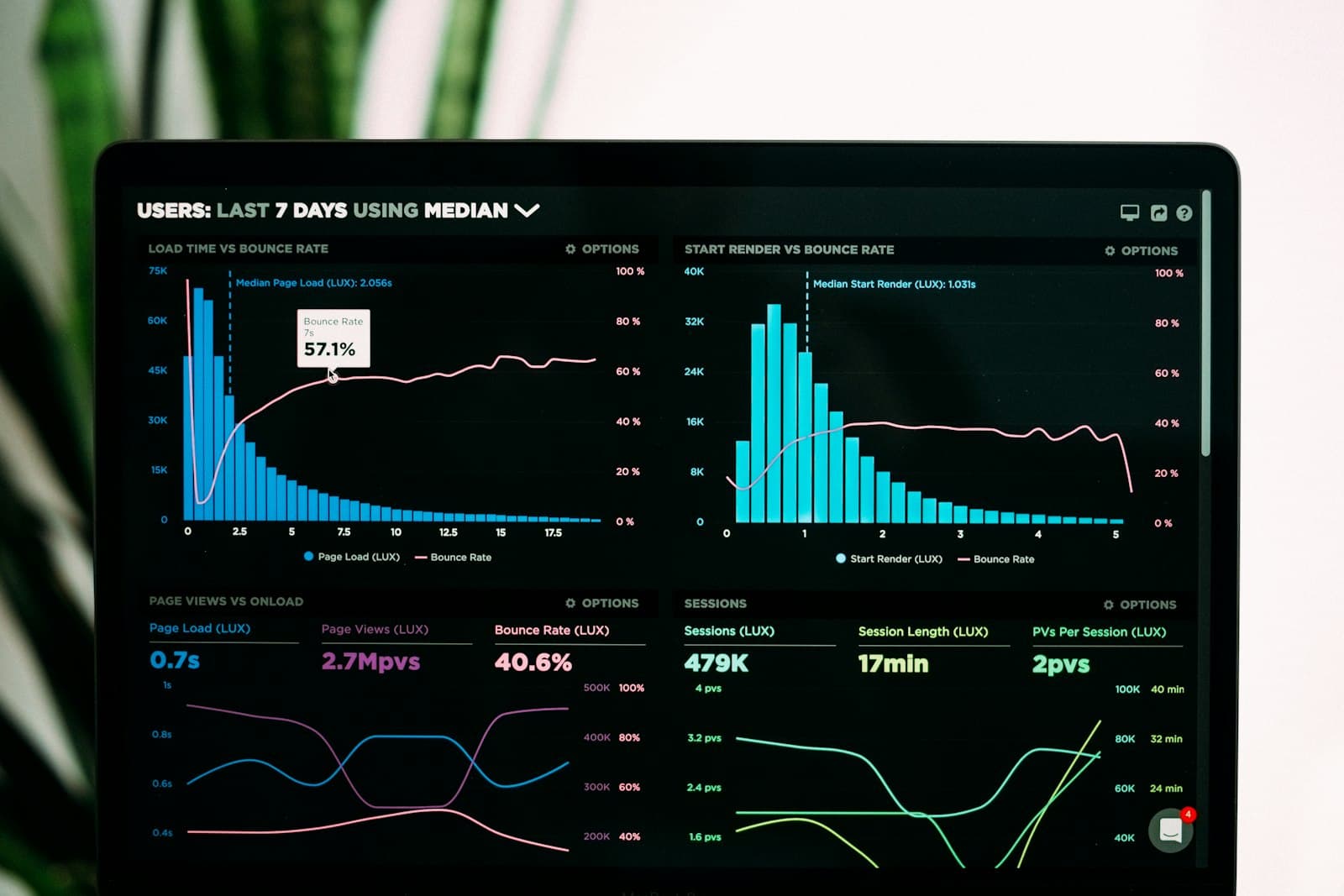
When both platforms run at once, the headline metric that lies is the sum of platform-reported conversions. Google reports the conversions it believes it influenced. Meta reports the conversions it believes it influenced. Both are using their own attribution windows and their own view of the journey, and neither is aware of the other. A customer who saw a Meta video on Sunday, searched your brand name on Wednesday, clicked a Google ad and bought will appear in full in both dashboards. Add them up and you have counted one customer twice.
This does not look like an error. It looks like both platforms working, which is exactly why it survives so long. The account grows, the dashboards both look healthy, and the total reported conversions comfortably exceed what the business actually closed — a gap nobody notices because nobody is comparing the two totals in the same place.
The second number that catches it
The only honest total is the one your CRM or your accounts produce: real customers, real revenue, over the same period. Put platform-reported total next to business-reported total in one view. When platform-reported exceeds business-reported by a widening margin, the two systems are competing to claim the same customers — and any budget decision made from the platform dashboards is being made from a number that does not exist.
Cross-platform attribution is genuinely unsolved, and anyone selling you a tool that resolves it cleanly is overselling. What works in practice is not a better attribution model but a cruder and more honest one: hold the business total as the denominator, use platform numbers only for within-platform comparison, and settle real incrementality questions with holdout tests rather than with attribution reports. Turn one platform off for a defined period and watch the business total. It is blunt, it costs something, and it is the only method that answers the question.
A realistic sequence for a Nepali business starting from zero
This is the order I would actually work in, given the market constraints above. It front-loads the unglamorous parts because those are what determine whether anything later is measurable.
- Settle the payment route before building anything. Foreign ad spend is a service import with annual foreign-currency ceilings, and the ceiling applies to your total across both platforms. Confirm the route with your own bank and a Nepali chartered accountant. A campaign that stops mid-flight because the card hit its limit is worse than one that never launched.
- Fix the landing page. With Google lead forms unavailable in Nepal, every Google conversion has to happen on your page. Mobile is around 62% of device traffic here. If the page is slow on a mobile connection, both platforms will underperform and you will blame the wrong thing.
- Install conversion tracking and prove it works before spending. Trigger every conversion event manually, confirm each fires once per real action, and check that what the platform counts matches what actually arrived. Untracked spend is not a cheap test — it is an expensive one with no output.
- Solve the call gap explicitly. Google cannot report calls in Nepal. Decide now how a phone enquiry gets attributed — a separate number on paid landing pages, or a question asked on every call and logged without exception. Decide before launch, because retrofitting this is guesswork.
- Run Keyword Planner for Nepal on the five phrases a customer would type. This single check decides your first platform, and it takes twenty minutes.
- Launch one platform, not two. Google Search if the volume exists; Meta if it does not. One campaign, tight targeting, one clear conversion action.
- Run for one full sales cycle before judging anything. Not two weeks. A full cycle, so you can see what closed rather than what converted.
- Reconcile leads against the CRM and compute close rate by source. This is the step that turns a platform question into a business answer, and it is the step most accounts never take.
- Add the second platform only once the first is understood. Fund it from a written rationale about which job it is doing, not from a percentage split someone quoted you.
- Once both run, add the business-total reconciliation to your monthly review permanently. From the day the second platform launches, the platform dashboards stop summing to reality.
Where each platform fails
Both platforms have characteristic failure modes, and knowing them is more useful than knowing their features, because these are what you will actually be diagnosing.
Where Google fails
- The demand ceiling is real and arrives without warning. Performance is fine, budget increases, and results degrade — because the additional spend is buying progressively less relevant queries. This reads as "the account stopped working" and is actually the market being finished.
- Broad matching drifts. Left unread, the search terms report will show you paying for queries with no commercial relationship to what you sell. This is the most common single source of waste in a Search account, and it is caught only by reading the report weekly.
- Performance Max fails opaquely. A decline in a Performance Max campaign is harder to diagnose than a decline anywhere else, and if the conversion signal feeding it is wrong, it will optimize confidently toward the wrong outcome across every surface at once.
- In Nepal specifically, it under-reports itself. Calls cannot be tracked, so a genuine contribution goes uncounted and the platform looks worse than it is.
Where Meta fails
- Creative fatigue outpaces every other lever. The account does not decline because the targeting broke; it declines because the audience has seen the ad too many times. Bidding changes do not fix this and a new creative does.
- Lead volume masquerades as performance. In-ad lead forms remove so much friction that the volume can look excellent while almost nothing closes — this is the metric that lies on the Meta side, and the close rate by source is what catches it.
- It is judged too early. A demand-creation platform evaluated on day-one cost per lead will always lose to a demand-capture platform, because it is doing a job that takes longer by design.
- Testing without discipline teaches nothing. Three ads differing in four ways produce a winner and no reusable knowledge, which is why the same accounts keep re-running the same inconclusive test.
The honest scope of this comparison
What this post does not do: it does not tell you what a click costs in Nepal on either platform, because nobody credibly knows and I am not going to be the twelfth site to make it up. It does not tell you which platform delivers better return in this market, for the same reason. And it does not claim my own numbers are Nepali numbers — the spend behind my experience is mostly from other countries, and I would rather say that plainly than let a reader infer otherwise.
What it does do is give you the structural facts that are actually knowable and actually decisive: which platform buys declared intent and which manufactures it, which Google features simply do not exist in Nepal, where the measurement gaps are, and how to sequence the decision so the answer comes from your own account rather than from an article. Those facts do not expire the way a benchmark table would, and they are enough to make the choice correctly.
Where to go from here
Run the Keyword Planner check for Nepal today. Twenty minutes settles which platform is first, and it settles it with your data rather than anyone's opinion. Then fix the landing page and the conversion tracking before a rupee of spend goes out, because in this market — with no Google lead forms, no call reporting and no Shopping — your own site is carrying more of the conversion path than it would anywhere else in South Asia.
The market-specific mechanics of running Google Ads from Nepal are covered in full in the Nepal Google Ads guide, and the reason no cost table appears in either post is set out in the post on Google Ads costs and the missing Nepal benchmark data. I run both platforms for clients through Arcetis, and the pattern that holds across every account is the one this post opened with: the platform argument is almost always a badly-framed version of a question about which job the business actually needs done.
Frequently asked questions
Which is better in Nepal, Google Ads or Facebook Ads?
Neither, as stated. They do different jobs. Google Ads reaches people who have already typed what they want, so it converts faster but is limited by how many people search for your category each month. Facebook and Instagram ads reach people who were not looking, so the audience is effectively unlimited but arrives with no declared intent. If demand for your category already exists in search, start with Google. If nobody is searching for what you sell, Meta is the only one of the two that can create the demand.
Is Facebook advertising cheaper than Google Ads in Nepal?
No published data answers this, and anyone quoting a Nepal cost-per-click comparison is quoting a number that has no source. Cost per click is also the wrong comparison, because the two platforms sell different things: a Google click usually comes from someone with a declared want, and a Meta click usually does not. A cheaper click that closes at a lower rate is not cheaper. The only comparison worth making is cost per closed customer, computed in your own records.
Can Nepali businesses use Google lead forms in their ads?
No. Google publishes a country eligibility list for lead form assets and Nepal is not on it, while Bangladesh, India, Pakistan and Sri Lanka are — Nepal is the South Asian outlier here. In-ad lead capture on Google is therefore unavailable to Nepali advertisers, who must send traffic to their own landing page and form. Meta's lead ads are available and mature, which is a real, concrete advantage for Meta in this market.
Can Google Ads track phone calls in Nepal?
Not natively. Google publishes the list of countries eligible for call reporting and Google forwarding numbers, and Nepal is not among them. A phone number can still be shown on the ad as a call asset, but the call itself cannot be counted, attributed or used as a conversion by Google. In a market where a large share of enquiries arrive by phone, that is a measurement gap you have to close manually with a separate call-tracking arrangement or disciplined intake questions.
Can I run Google Shopping ads for a Nepali online store?
No. Google Merchant Center, Shopping ads and free product listings are not available for Nepal — the country does not appear on Google's supported countries and currencies list, and India is the only South Asian country that does. This removes the standard e-commerce path on Google and pushes Nepali online sellers toward Search, Demand Gen and the Meta side of the split instead. It also means retail-goal Performance Max is effectively out of reach for a Nepal-based merchant, since that variant depends on a Merchant Center feed.
Should a new business in Nepal start with Google or Meta?
Check search volume first. Open Keyword Planner, set the geo to Nepal, and look at whether anyone searches for what you sell. If the monthly volume is meaningful, start on Google Search, because you will be buying people who already want the thing. If the volume is negligible — which is common for new categories and for services people do not know exist — start on Meta, because you have a demand-creation problem and search cannot solve a demand-creation problem.
Do Google and Facebook conversion numbers add up when you run both?
No, and expecting them to is one of the most expensive mistakes in a two-platform account. Each platform counts a conversion it believes it influenced, using its own attribution window and its own view of the journey. A customer who saw a Meta ad, searched your brand, clicked a Google ad and bought will be claimed in full by both. Summing the platform dashboards always overstates reality. Reconcile against your CRM or accounting total instead.
Can I target ads in the Nepali language on Google?
Not through language targeting. Nepali does not appear in Google's list of languages available for ad targeting, which covers 51 languages and includes Hindi, Bengali, Urdu and Tamil but not Nepali. Google also states that ads created in a language unsupported for ads language targeting will be disapproved, so Devanagari-script Nepali copy carries a disapproval risk. Meta operates a different language model for delivery, which is one more reason the two platforms behave differently in this specific market.
Book a free 10-minute consultation
Sapun Lamichhane is a business growth analyst and founder of Arcetis, based in Pokhara, Nepal. If you want a second opinion on your account, your funnel, or whether a channel is worth your budget at all, book a free 10-minute call — no pitch, and a straight answer even when the answer is that you do not need help.
Direct: +977 9846162626 · lamichhanesapun2@gmail.com
This post supports the frameworks documented in full on the Authority page.