How to Start an Ecommerce Business in Nepal: The Operational Build
Key takeaways
- Starting an ecommerce business in Nepal is not really a website project. Delivery, cash-on-delivery reconciliation, returns and inventory accuracy are where these businesses fail.
- Cash on delivery makes Nepali ecommerce structurally different: money sits with a courier, deliveries get refused, some orders were never serious.
- Measure delivered-and-paid orders and contribution margin per order. A store whose order count rises while its delivered-and-paid share falls is shrinking.
- Google Merchant Center, Shopping ads and free product listings are unavailable for Nepal, so demand must come from search, social and marketplaces rather than a product feed.
- Build in the order that reduces risk: catalog and stock truth, then delivery you can keep, then reconciliation, then paid demand.
The short answer
To start an ecommerce business in Nepal, build the operations first and the storefront last. Decide what you sell, photograph and describe it yourself, keep an accurate stock count, test delivery to both Kathmandu Valley and outside-valley addresses, set up a process for reconciling cash collected on delivery against orders dispatched, add a confirmation call before dispatch, and instrument it so you know which products and channels make money after returns are netted off.
Ecommerce is marketed as a website business. It is not. It is a logistics and cash-handling business with a website attached, and that is truer in Nepal than almost anywhere, because cash on delivery dominates — your revenue travels the country in someone else's bag before it becomes yours.
This post assumes you have decided to build something. If you are still choosing between social selling, a marketplace and your own store, start with how to sell online in Nepal. Most of what follows applies whichever channel you pick.
What you are actually committing to
On a normal Tuesday you are packing parcels, calling customers whose orders looked doubtful, chasing a delivery that has sat somewhere too long, checking a cash statement against a list of dispatched orders, and finding that two of last week's parcels came back unexplained. All of that is the business.
The prerequisite nobody wants to hear
If you cannot describe what happens to a parcel a customer refuses at the door — who collects it, who updates the stock count, who bears the cost — you are not ready to take orders.
Out of scope, deliberately
Company registration determines the entity you trade as. PAN and VAT registration determine your tax position. Customs duties on imported stock change your landed cost, and therefore every margin figure here. All three are real and all three are outside my expertise — take them to the Office of the Company Registrar, the Inland Revenue Department, the Department of Customs, and a Nepali chartered accountant.
Platform choice, briefly
The three realistic paths are a hosted platform, a custom build, or marketplace-first with your own store later. The build-versus-buy argument is written up in the post on Shopify versus a custom Next.js storefront — read that rather than a restatement here.
One Nepal-specific consideration it does not cover. International platforms assume integrations — payment providers, shipping carriers, tax calculation, address validation — that suit the market they were built for, and several either do not exist for Nepal or work in reduced form. List what you need the platform to connect to, and verify each one integrates today for a Nepal-based merchant.

Product data and catalog discipline
The catalog is the raw material for everything downstream: what your ads can target, what a customer believes they are buying, and how many questions they must ask first. Every gap in a product page becomes a message, so catalog quality decides both your conversion rate and how much of your day disappears into replies. Four things carry the weight — consistent naming, real photographs of the item you will actually ship, complete specifications written out, and an accurate stock count.
Supplier stock images deserve a warning in a market this small. If four sellers list the same product with the same supplier photograph, a buyer has nothing to tell them apart except price — you have chosen to compete on price without deciding to. Your own photographs show the item at the quality you will ship, which cuts both hesitation and disputes.
Delivery and logistics inside Nepal
Delivery inside Kathmandu Valley and delivery outside it are two different operations with different costs, timeframes and reliability, and treating them as one is the commonest early mistake. I will not quote rates or timeframes — they vary by courier, route, parcel and season. What matters is the decisions.
- Decide which destinations you serve at all, before launch. Serving everywhere is how you end up with parcels you cannot track.
- Decide whether outside-valley orders are priced differently. If they cost more to serve and you charge the same, you have built a subsidy without deciding to.
- Decide what you promise at checkout, and promise the slower thing. Under-promising on delivery is the cheapest goodwill available to a Nepali store.
- Decide how you will know what happened to each parcel: dispatched, attempted, delivered, cash collected, or returned with a reason. A record living only in a courier portal cannot be reconciled.
A customer who waited longer than expected, for an item bought on impulse, and who must hand over cash at the door, has both motive and opportunity to decline. A delivery promise you cannot keep is a margin decision, not a marketing one.
Failure mode
The most expensive delivery failure is not a lost parcel. It is a parcel that goes out, is refused at the door and travels back — a round trip of cost against zero revenue, plus an item that may return damaged. Track only successful deliveries and you never see this number.
Cash on delivery operations
This is the hardest part of Nepali ecommerce and the reason imported advice does not transfer. In a card-first market payment settles before the parcel moves. Under cash on delivery it settles at the far end of a physical journey, by a third party.
Reconciliation
Match cash received against orders dispatched on a fixed schedule, per order rather than on totals. A remittance roughly the right size is not reconciliation; a line-by-line match naming which orders remain unpaid is. Without it, a missing order looks like a delayed one until it is too old to chase.
The working capital gap
Between dispatch and cash arriving you have paid for stock, packaging and possibly the outbound trip, and received nothing. That gap grows with your success, and it is behind the commonest failure in growing Nepali stores: profitable on paper, unable to pay the supplier. Track dispatched-but-unpaid value as a standing number.
Refused deliveries and who eats the cost
When a parcel is refused, someone bears the outbound cost, the return cost, and the handling of an item now back in unknown condition. Your courier agreement decides how much lands on you, and you should know that before signing. No arrangement makes refusals free, so the goal is to reduce the count, not shift the cost.
Non-serious orders, and the confirmation call
Cash on delivery makes placing an order almost costless for the buyer, so a minority are impulse, mischief, or placed under someone else's name. A confirmation call between order and dispatch filters the orders that were never real, catches address and phone errors before a parcel travels on them, and sets expectations with the person who will answer the door. It costs staff time, which feels expensive until weighed against one round-trip refusal.
A note for advertisers: phone calls are a major order channel in Nepal, and Google's call reporting and forwarding numbers are unavailable here — Nepal is absent from Google's published list of eligible countries (checked July 2026). You can still put a phone number on an ad, but those calls cannot be measured natively.
So measure delivered-and-paid orders, not orders placed. An order placed is an intention; an order delivered and paid is revenue. Every dashboard reports the first by default.
Returns and the reverse journey
Returns are almost always unplanned and more expensive than expected. A parcel going out is one of many on a planned route; a parcel coming back is a special case someone must arrange, collect and inspect.
Decide the policy before you need it and publish it: which items can be returned, within what window, in what condition, who pays for the return trip, and whether the refund covers delivery. Then decide the internal half, where the cost lives — who inspects the item, who decides whether it is sellable, who updates the stock count. A returns process with no named owner fills a corner of the room with undecided items.
Inventory truth
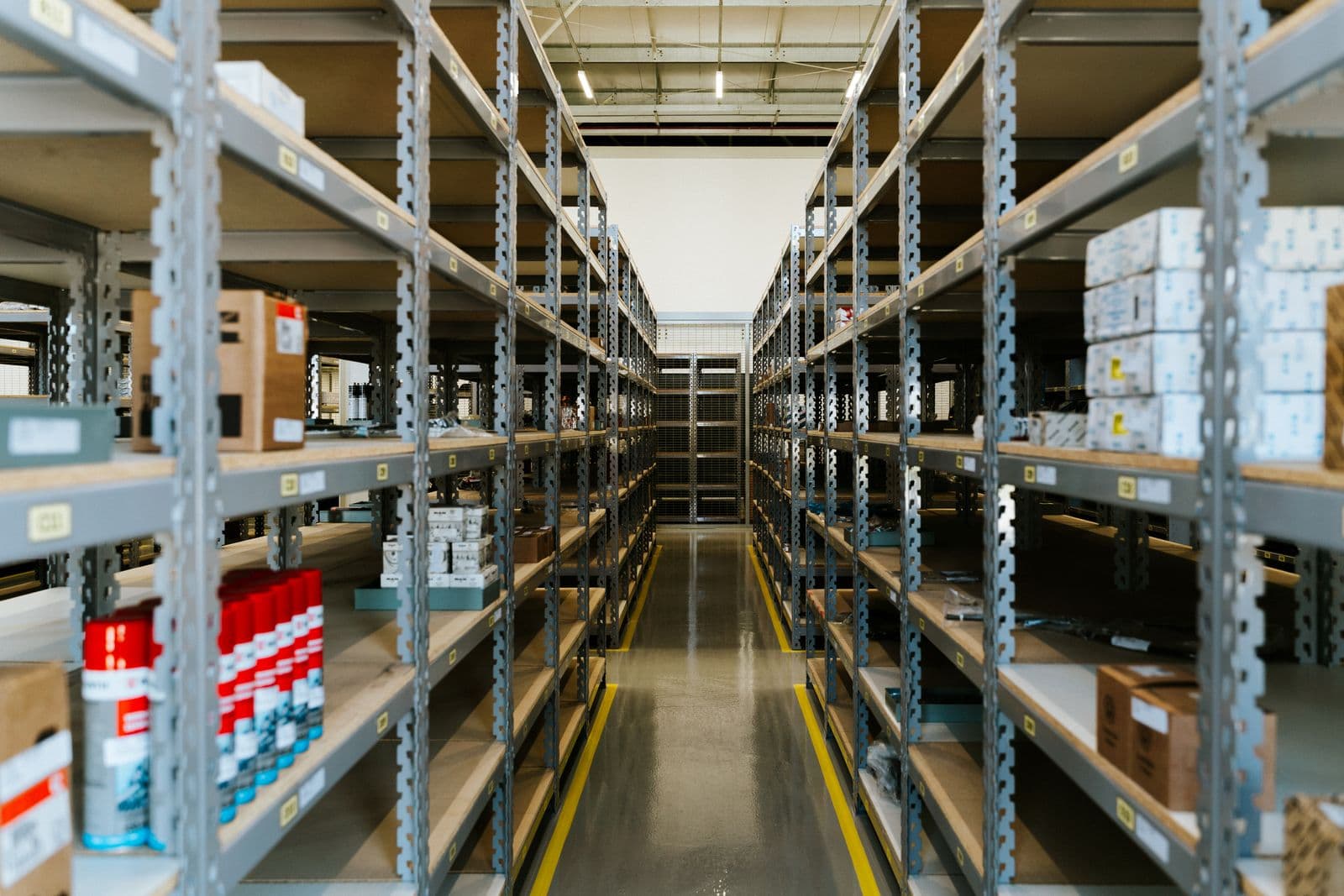
Overselling an item you do not have is the fastest way to destroy trust in a small market. The customer chose you, waited, then received a cancellation — worse than never being able to buy, because you also wasted their time. Where recommendations travel by word of mouth, that costs more than several new customers.
The discipline is simple to state and hard to maintain: one stock number per item, in one system, updated at the moment of every event that changes it. This is where multi-channel selling gets expensive: two channels drawing on one pool without a shared count will oversell your best product at your busiest moment. Count physically on a schedule and compare; the gap is never zero, and it tells you what is not being recorded.
The measurement layer
Most small stores measure revenue and traffic, which say almost nothing about whether the business works. Contribution margin per order is revenue minus product cost, packaging, outbound delivery, the cost of failed and returned deliveries spread across the orders that succeeded, collection charges, and acquisition cost. Calculate it per product, because your catalog is almost certainly carrying items that lose money once returns are attributed, and per channel, because acquisition cost and return behavior differ sharply.
The events worth instrumenting are the ones that correspond to money: purchase, the confirmation-call outcome, dispatch, delivery, payment. The last three do not happen on your website, so they have to be brought into analytics deliberately. The mechanics are in the guide to conversion tracking with GA4 and Google Tag Manager — and the principle that matters here is that what you send back to an ad platform should be the value you kept, not the value at checkout.
One platform constraint shapes how a Nepali store gets demand at all. Google Merchant Center, Shopping ads and free product listings are not available for Nepal — Nepal does not appear on Google's published list of supported countries and currencies for Merchant Center (checked July 2026), and neither do Bangladesh, Pakistan or Sri Lanka. Retail-goal Performance Max, which depends on that feed, is out of reach too. You cannot have Google merchandise your catalog, so demand comes from search, social, marketplaces and organic listings — which is why the catalog work matters: those pages are the only merchandising you have.
StatCounter's Nepal figures for June 2026 put Google at roughly 96% of search referrals, with mobile at about 62% of device traffic against 37% desktop. It is a sample rather than a census, so treat the direction as settled and the decimals as indicative: a store that is awkward on a phone is failing most visitors. Where demand should come from is the subject of the companion post on digital marketing in Nepal.

Customer service as an operational system
Customer service in a small store is usually treated as a personality trait: the owner is responsive, so service is good. That holds until volume rises or the owner is away. Three things make it a system: a response time you actually staff for, a single place where conversations live, and written answers to recurring questions.
The failure mode to design against is conversations that live only in one person's phone. The business then cannot operate without that person, cannot hand work over, and cannot see patterns — and it is how orders get dropped between enquiry and dispatch. The fix is set out in the post on building a routing system that does not drop leads — a defined path with an owner at every stage and a fallback when nobody picks it up.
Payment and checkout
Digital wallets and bank transfer are both common in Nepal alongside cash on delivery, and offering more than one paid-in-advance option is worth doing. I am staying on what I know: checkout as a conversion and trust problem. Fees, settlement times and provider comparisons change constantly and are not my field — compare current terms directly.
Every extra field, account requirement and unexplained step costs orders, and the cost is highest on mobile. Ask only for what you need to deliver the parcel and reach the customer, and show the total including delivery before the final step — a charge revealed at the last moment is an avoidable abandonment.
Trust matters more where online payment fraud is a live concern. A visible address, a phone number a person answers, a stated returns policy and real photographs do more for checkout conversion than any design change. A prepaid order also carries no collection risk and a lower refusal rate, so making prepaid feel safe pays back twice.
What breaks, and the order to build in
| Operational area | What breaks | What to put in place first |
|---|---|---|
| Catalog | Thin listings generate questions; supplier photos make you interchangeable | Own photographs and full specifications |
| Inventory | Overselling stock you do not have, then canceling | One stock number in one system, updated at every event |
| Delivery | Promises you cannot keep outside the valley turn into refusals | A defined service area and a promise slower than realistic |
| Cash on delivery | Cash sits with couriers; missing remittances surface too late | Line-by-line reconciliation of cash against orders dispatched |
| Order quality | Non-serious orders and wrong addresses ship, travel, come back | A confirmation call or message before every dispatch |
| Returns | No owner, so items pile up, still counted as sellable stock | A written policy plus a named person who inspects and restocks |
| Measurement | Revenue rises while margin per order falls, invisibly | Delivered-and-paid tracked per product and per channel |
- Get the legal and tax foundation reviewed by a Nepali chartered accountant before buying inventory, so landed cost is known rather than discovered.
- Choose a narrow product range you can source reliably, then build the catalog: your own photographs, consistent naming, complete specifications, one stock number per item.
- Test delivery yourself — real parcels to a valley address and an outside-valley address, including one you deliberately refuse.
- Define the returns policy and the internal returns process, with a named owner, before taking an order.
- Set up cash-on-delivery reconciliation and the confirmation-call step before launch.
- Build the storefront. By now you know exactly what it must do, which makes it a short project.
- Instrument measurement: delivered-and-paid, contribution margin per order, return-to-origin rate by destination, dispatched-but-unpaid value.
- Launch at a volume you can serve manually, and watch the pipeline end to end.
- Only now add paid demand, scaled against contribution margin per order rather than revenue.
The metric that lies, and where this breaks
Revenue can rise for months while the business gets structurally worse, because it is measured at checkout and every cost that destroys it happens later. You push harder on acquisition, orders rise, revenue rises — but the extra orders come from a less committed audience, so more are refused at the door, and none of that is netted off. The second number that catches it is contribution margin per order, paired with the return-to-origin rate by destination.
- The website absorbs the whole budget and timeline, so operations get designed in the first week of real orders.
- Delivery promises are set by what sounds competitive rather than what the business can do, producing refusals nobody traces back to the promise.
- Returns have no owner, so items come back, sit somewhere, and stay counted as sellable inventory — which then oversells.
- Ad spend rises before unit economics are known, so more money buys orders that lose money on delivery.
Who should not start an ecommerce business in Nepal
Do not start one if you cannot fund inventory plus a buffer of cash tied up in dispatched-but-unpaid orders — cash on delivery makes ecommerce more working-capital-hungry than first-time owners expect. Do not start one if you are unwilling to do the physical and administrative work.
And do not start one if your product has no reason to be bought from you rather than the nearest shop or marketplace listing. Ecommerce does not create a reason to buy; it removes a distance barrier. If trust and physical inspection dominate the decision, expect a return rate that changes the arithmetic.
Where to start
Pick the narrowest range you can source reliably. Photograph it yourself. Put one stock number in one place. Send five real parcels, including one you have someone refuse, and follow each through to the cash landing in your account. You will learn more from those than from platform research.
The pattern I keep meeting across markets is that the storefront is the visible part and almost never the constraint. I build the measurement and operational systems behind stores like this through Arcetis, and the first useful move in an existing Nepali store is nearly always the same — replace the orders-placed number with a delivered-and-paid number and see what the business actually looks like.
Frequently asked questions
How do I start an ecommerce business in Nepal?
Build the operations before the storefront: a catalog with your own photographs and accurate stock counts, a delivery arrangement tested for both Kathmandu Valley and outside-valley addresses, a process for reconciling cash collected on delivery against orders dispatched, a confirmation call before dispatch, and measurement showing which products make money after returns. The website is the last piece and the easiest.
Is cash on delivery necessary for an online store in Nepal?
For most consumer categories it is still expected, and removing it will cost you orders. But it is not free. Cash on delivery means your revenue sits with a courier before it reaches you, refused deliveries cost you the outbound trip for nothing, and non-serious orders are cheap to place. Offer it, price it into your margin, and cut the failure rate with confirmation calls.
Can I run Google Shopping ads for a Nepali online store?
No. Google's supported countries and currencies list for Merchant Center does not include Nepal, so Merchant Center, Shopping ads and free product listings are unavailable to a Nepal-based merchant (checked July 2026). Nepal does appear on Google's separate local inventory ads country list, which is difficult to square with the above; check both before planning around either. Retail-goal Performance Max, which depends on that feed, is effectively unavailable too. Demand has to come from search ads to your own pages, social, marketplaces and organic search.
What is the biggest reason ecommerce businesses fail in Nepal?
Margin destroyed by operations rather than a shortage of orders. Refused and returned deliveries, cash that takes time to come back from couriers, stock counts that were wrong so orders got canceled, and delivery promises the business could not keep. None of it appears on a revenue chart, which is why owners discover it only when they run short of cash while sales look healthy.
Do I need to register a company to sell online in Nepal?
Company registration, PAN and VAT registration, and customs duties on imported stock are real obligations that will apply to you, and all are outside the scope of this article and outside my expertise — I am a growth and software consultant, not a lawyer or an accountant. Take them to the Office of the Company Registrar, the Inland Revenue Department and the Department of Customs, and retain a Nepali chartered accountant.
Should I build my own online store or sell on a marketplace in Nepal?
That is a channel decision, and the companion post on how to sell online in Nepal covers it properly. The short version: a marketplace gives you demand and takes margin and the customer relationship; your own store gives you margin and the relationship and no demand at all. Many Nepali sellers run both. Whichever you choose, the operational work described here does not go away.
How much does it cost to start an online store in Nepal?
I will not quote a figure, because the storefront is rarely the significant cost and everything significant depends on your category. Model it instead: inventory bought before it sells, cash tied up in orders dispatched but not yet paid, packaging, the cost of deliveries that fail, and acquisition. Build that model before spending on a website, and have the duty side reviewed by a Nepali chartered accountant.
What should I measure in a Nepali ecommerce business?
Delivered-and-paid orders as the headline number, not orders placed. Then contribution margin per order, broken down per product and per acquisition channel. Then the return-to-origin rate, split between Kathmandu Valley and outside-valley destinations, because those behave differently. Then the time between dispatch and cash reaching your account. Revenue alone will tell a flattering story for months while all four move against you.
Book a free 10-minute consultation
If you are building or already running an online store in Nepal, bring what you have — orders placed, orders delivered and paid, returns — and we can look at where the margin is actually going. If the honest answer is that your operations are fine and you do not need help, I will tell you that.
Direct: +977 9846162626 · lamichhanesapun2@gmail.com
This post supports the frameworks documented in full on the Authority page.