Digital Marketing in Nepal: What Actually Works, and What the Market Gets Wrong

Key takeaways
- Most Nepali businesses buy tactics before they can tell whether a tactic worked, so years of activity produce no compounding asset and no usable data.
- The order that works is: a site and contact path you own, then measurement, then paid amplification. Reversing it is the most expensive mistake in the market.
- Google held 95.93% of Nepali search and 99.14% on mobile in June 2026 according to StatCounter, which makes intent capture a Google problem in Nepal and very little else.
- A Facebook page is a rented audience — no owned data, no durable contact list, and no protection against a policy change or a reach shift you did not choose.
- Google Ads is missing features in Nepal that India has: no Merchant Center, no call reporting, no lead form assets, and no Nepali as a targetable ad language.
The short answer
Digital marketing in Nepal works when it is built in the right order and fails when it is bought as a list of tactics. The order that compounds is: first an asset you own — a website with a clear path to contact you, including the messaging apps Nepali customers actually use; second, measurement that records which enquiries came from where; and only third, paid amplification on Google, Meta or both. The usual order here is the exact reverse: a Facebook page, boosted posts for years, a website eventually, no measurement ever. The result is activity with nothing accumulating under it.
The specifics that make Nepal different are worth stating plainly. Search here is effectively Google — StatCounter put Google at 95.93% of Nepali search across all devices and 99.14% on mobile in June 2026, with mobile at 62.13% of device traffic. Social attention sits on Meta platforms. Customers message on WhatsApp and Viber rather than emailing. Cash on delivery is still dominant in ecommerce, which moves the moment of commitment away from your checkout. And paying foreign ad platforms runs into annual foreign-currency ceilings that often bind before the market does. None of that appears in advice written for India, which is most of what a Nepali business will find.
The one-line version
Own something, measure something, then pay to amplify it. A business that advertises before it can measure is buying the feeling of doing marketing, and will have no evidence next quarter about what to change.
The channel landscape in Nepal, honestly
Search is Google, to a degree that removes the decision
StatCounter Global Stats recorded Google at 95.93% of search in Nepal across all platforms in June 2026, with Bing at 2.99% and everything else in fractions of a percent. On mobile, Google reached 99.14%. StatCounter is a sample, not a census — it measures page views on sites carrying its tracking code, not unique people, and applies no corrective weighting — so the decimal places are not precise. The direction is not in doubt: the gap to the nearest competitor is orders of magnitude wider than any plausible sampling error. Search optimization in Nepal is Google optimization, and paid search is Google Ads. The same source puts mobile at 62.13% of device traffic against 37.46% desktop, so the primary experience should be designed on a phone and desktop treated as secondary. For a business whose customers are physically nearby, most of that search volume resolves in the map results rather than the blue links, which is a different discipline with different work behind it — getting found by people ready to walk in covers that side.
Social is where attention is, not where intent is
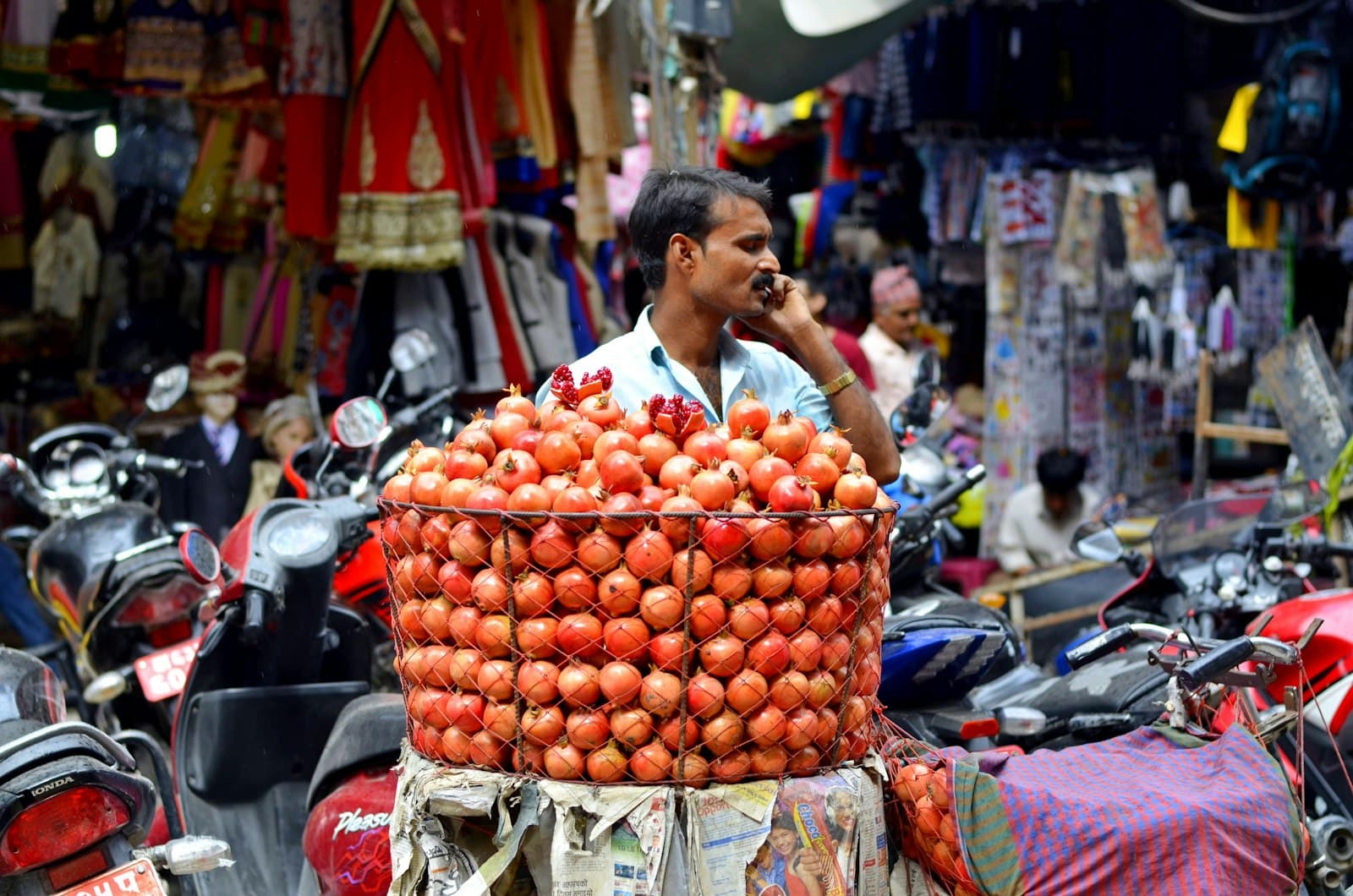
Meta platforms hold the bulk of social attention in Nepal, which makes them the cheapest way to reach people who were not looking for you. But attention is not intent. Someone scrolling Facebook in Pokhara at nine in the evening is not in the market for a plumber; someone typing "plumber near me" is. Social creates demand, search captures it, and confusing the two means advertising considered purchases to people with no reason to care.
The sequencing argument
First: something you own
A domain, a site on it, and an unambiguous path to contact you. Five good pages will serve most businesses. What matters is that it is yours, not subject to another company deciding how many people see you this month. If most customers message on Viber or WhatsApp, that button belongs above the fold, not under a contact form nobody fills in.
This comes first for structural reasons. Everything afterwards either accumulates on an asset you control or evaporates: content on your own site keeps earning, a platform post earns for forty-eight hours. It also has to be built so search engines can understand it, which is an architecture question rather than a keyword one — why SEO has to be architecture applies with full force even to a five-page Nepali business site.
Second: measurement, before a single rupee of media
This is the step that gets skipped, and skipping it makes years of spend unauditable. You need analytics on the site, conversion events for the things that matter — a form submitted, a call started, a message opened — and enough discipline in recording enquiries to say later which channel produced a paying customer, not just traffic.
In Nepal this is harder than the tutorials suggest, because several Google features that make lead measurement easy elsewhere are unavailable here. Schedule it as real work rather than assuming it. The mechanics are in the conversion tracking guide for GA4 and Google Tag Manager — the step to complete before the first campaign runs, not after the first disappointing month.

Third: paid amplification
Only now does advertising make sense, because only now can it be judged. Start where intent exists if people search for what you sell, and where attention exists if they must be shown it. Run one channel properly before adding a second. Content programs, retargeting and influencer work come after this, because each is a multiplier on a foundation. The trade-offs are worked through in the Google Ads versus Facebook Ads comparison for Nepal, including the cases where the honest answer is neither.
Why the Facebook-page-only approach caps out
The default setup is a page, a few posts a week, and boosted posts when things are slow. It is not stupid — it is cheap, the audience is there, and it produces visible activity fast. It caps out for three structural reasons.
- You are renting the audience. The platform decides how many followers see a post, and changes that for commercial reasons unrelated to you.
- You own no data. A customer who messages the page is a relationship living inside the platform — not exportable, not rebuildable, not analyzable.
- One policy action ends the program. Restrictions and page disabling are ordinary events, and a business whose acquisition sits entirely on one page has a single point of failure it never chose.
None of this argues for abandoning Facebook, only for the page being a channel into an asset you own. The test: if the page disappeared tonight, what would you still have tomorrow?
What is genuinely different about marketing in Nepal
The foreign-exchange ceiling on paying overseas ad platforms
Foreign advertising spend is treated in Nepal as an import of services, must move through formal banking channels, and is subject to annual foreign-currency limits that are low relative to what a serious advertiser would want to spend. For many businesses that ceiling, not the market, is the real constraint on scale. The limits are documented in the Google Ads in Nepal guide, and I am not restating figures here. Foreign exchange, tax and registration sit outside what a marketing consultant should advise on — confirm the current position with your bank, Nepal Rastra Bank, and a Nepali chartered accountant.
WhatsApp and Viber instead of email
Playbooks written elsewhere assume email is the owned channel: capture an address, nurture it, sell to it. In Nepal that conversation happens in messaging apps, and an enquiry that would be an email in Europe expects a reply in minutes here. Three things change. Your site needs a message path as prominent as your phone number. Response time becomes a conversion metric, and reply speed is a bigger lever than any ad setting. And the enquiry log has to be kept deliberately, because a chat thread never appears in analytics — the most common measurement hole I see in Nepali businesses.
Cash on delivery, and what it does to the funnel
Cash on delivery remains a dominant payment behavior in Nepali ecommerce, and it reshapes the funnel. When the customer does not pay at checkout, the point of commitment moves to the doorstep. A completed order is a softer signal than it looks, return rates matter more than in a card-first market, and margin has to absorb orders that never become cash. Instrument the delivered-and-paid event, not just order-placed, or your advertising will optimize toward orders that never become revenue.
Scope note
Gateway fees, settlement times and per-provider comparisons are not covered here — terms change and it is not my expertise. Compare them directly with each provider. Checkout friction, though, is a conversion problem you can measure.
Bilingual search behavior
Nepali users move between English and Nepali within a single session, and the split is not random. Product names, brands and technical terms get typed in English far more than population-level fluency would suggest, because that is how products are labeled. Local and colloquial queries skew Nepali. Write in whichever language your customer would type.
The Google feature gaps nobody mentions
This is the most checkable difference, because Google publishes country lists for several features and Nepal is absent from three of them.
- Merchant Center, Shopping ads and free product listings are not available for Nepal — the country does not appear on Google’s supported countries and currencies list, and nor do Bangladesh, Pakistan or Sri Lanka. India is the only South Asian country on it, so retail-feed advertising is closed to Nepali merchants.
- Call reporting and Google forwarding numbers are not available in Nepal; the eligible-country list Google publishes omits it. A phone number can still appear on an ad, but the calls cannot be measured natively — a serious gap where the phone is a primary enquiry path.
- Lead form assets are not available in Nepal. Google’s eligible-country list includes Bangladesh, India, Pakistan and Sri Lanka but excludes Nepal, so traffic has to reach your own landing page and form.
- Nepali is not a supported ad targeting language. Google’s published language list contains neither Nepali nor an interface locale for it, and Google states that ads in an unsupported language may be disapproved. Nepali-script ad copy carries real risk; website content in Nepali does not.
Together these mean lead measurement in Nepal is structurally harder than one border away. The platform will not hand you the measurement, so the asset has to carry it.
Matching the goal to the channel
| If the goal is | The channel that fits | What to measure |
|---|---|---|
| Capturing people already searching | Google Search ads and organic search | Qualified enquiries per keyword theme, not clicks |
| Being found for local, in-person services | Google Business Profile and local search | Direction requests, calls and messages from the profile |
| Creating demand for a new or visual product | Meta feed and Reels, short video | Cost per qualified enquiry, and reply-to-close rate |
| Selling online with cash on delivery | Meta plus a fast, mobile-first checkout | Delivered-and-paid orders, not orders placed |
| Winning considered, high-value enquiries | Search plus a strong landing page and fast reply | Lead-to-customer close rate by source |
| Being cited in AI answers and assistants | Structured, well-sourced content on your own site | Assisted enquiries and branded search volume |
Measurement is what makes everything else compound
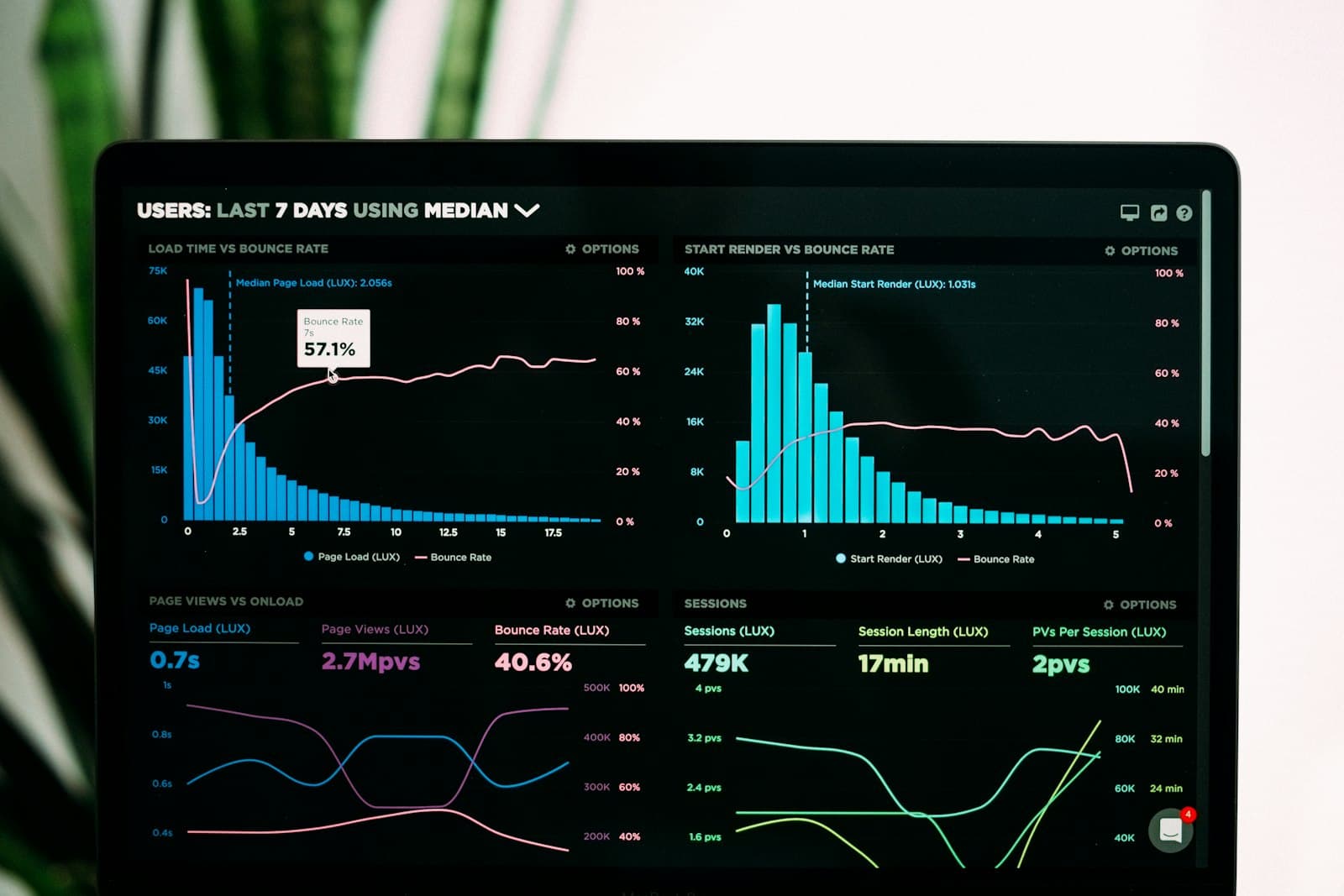
Marketing without measurement does not accumulate. Each campaign starts where the last did, because nothing was learned that survived it. The minimum version is smaller than people fear: analytics installed correctly, conversion events for the two or three actions that indicate a customer, a consistent record of where each enquiry came from — including those on WhatsApp or Viber — and a monthly habit of reading close rate by source. The full build is in the GA4 and Tag Manager conversion tracking guide.
The metric that lies
In Nepal the flattering metrics are followers, page likes, reach and impressions. All real numbers, none of them evidence. A page can gain followers steadily while producing fewer enquiries every month, because follower growth and buying intent are loosely related and can be bought outright. Impressions rise whenever budget rises.
The number that catches it is lead-to-customer close rate by source: of the enquiries a channel produced, what share became paying customers? Across accounts I have managed in seven countries, a lead-to-customer close rate of around 12% has been typical, with consultancy-type businesses nearer 8%. Those are my own figures from accounts largely outside Nepal — what I have seen, not a target you should expect. Anyone quoting a Nepal cost-per-click benchmark has no traceable source; why that data does not exist is set out in the post on Google Ads costs in Nepal.
Choosing an agency or freelancer in Nepal
I run an agency, so treat this section with the skepticism it deserves — then apply it to me too.
- "What will you measure, and how will I verify it myself?" A good answer names business outcomes and shows where to see them in your own accounts. A poor one talks about reach, engagement and a report they compile for you.
- "Whose name is on the ad account, the domain and the analytics property?" The only acceptable answer is yours.
- "What would make you tell me not to advertise?" A practitioner has a real answer; a vendor has never turned down work.
- "What did not work recently, and what did you change?" This tests whether they diagnose or only report.
- "Who actually does the work?" A pitch given by a senior person and executed by nobody in particular is the commonest disappointment in this market.
What should worry you
- Guaranteed rankings. Nobody controls Google’s results, so a guarantee is either a misunderstanding or a claim about terms too uncompetitive to be worth having.
- Guaranteed lead counts with no qualification standard attached. Volume is easy to manufacture; the qualification is the entire value.
- No administrator access to your own ad account or analytics. The clearest warning sign there is; the only thing it protects is the agency.
- Reporting you cannot audit — screenshots and decks whose numbers do not reconcile with the platform.
- A proposal that opens with channels and packages rather than what you sell, to whom, at what margin, and what happens when someone enquires.
Non-negotiable
You own the ad account, the domain, the analytics property and the Google Business Profile. Always. Grant an agency access; never let one hold them. This costs nothing at the start and is near impossible to fix once a relationship sours.
When a Nepali business should not spend on digital marketing at all
Some businesses should close this article and go do something else. That is a genuine recommendation, not modesty. If the real doubt is about the offer rather than the channel, the cheaper move is to find out whether anyone wants it before funding a campaign to announce it — the demand-testing sequence for a new business idea sets out how to do that in a few weeks and for very little.
- Your capacity is already full. Advertising into a full order book buys a worse customer experience.
- Nobody answers enquiries quickly. If messages sit for a day, every rupee funds a competitor who replies in ten minutes, and no targeting change fixes it.
- The margin cannot carry acquisition cost. If a sale nets little, change the offer rather than the ads.
- No search demand and no visual appeal. Some products are bought only through referral or physical presence, and advertising them is expensive market education.
- You cannot measure anything yet. Two weeks on tracking beats two months of unattributed spend.
If you are starting from nothing
- Register and hold your own domain, in the business’s name, with credentials you control.
- Build a small, fast, mobile-first site: what you sell, who for, proof you can do it, and how to reach you, with WhatsApp or Viber prominent.
- Claim your Google Business Profile if you serve customers locally. It is available in Nepal, free, and for many businesses produces more enquiries than the website.
- Install analytics and define the two or three conversion events that indicate a customer. Verify each fires by triggering it yourself.
- Log every enquiry in one place with its source, including messages. A spreadsheet is enough; the discipline matters more than the tool.
- Answer enquiries fast, and record the outcome of each one.
- Publish content answering what customers actually ask, in the language they would type. Ten useful pages beat a hundred filler ones.
- Only now run one paid channel, with a budget small enough that being wrong is survivable.
- After a full quarter, move budget toward whichever source converted. This is the first point at which you are optimizing anything real.
Where this leaves you
The uncomfortable part of this argument is that the first months look unproductive. There is no dashboard to admire while you register a domain and define conversion events. But the Nepali businesses whose marketing gets cheaper each year did the boring part, and the ones stuck where they were three years ago skipped it.
To go deeper, the Google Ads in Nepal guide covers paid search and the payment constraints, and the guide to ranking in AI search for Nepali businesses covers the surface where answers are given without a click. I run this work through Arcetis, the growth and automation practice I run from Pokhara. The pattern holds in every market I have worked in: the order you build in decides whether anything compounds.
Frequently asked questions
What is the best digital marketing strategy for a small business in Nepal?
Build in order rather than buying tactics. First, a website you own with a clear contact path, including WhatsApp or Viber since that is where Nepali customers actually message. Second, working measurement — analytics and conversion tracking that records which enquiries came from where. Only third, paid advertising. A business that advertises before it can measure is buying activity, not customers, and will have no evidence to improve on next quarter.
Is Google Ads or Facebook Ads better in Nepal?
They do different jobs and the question is usually framed wrongly. Google captures people already searching for what you sell, which suits services, urgent needs and considered purchases. Facebook and Instagram create demand among people who were not looking, which suits visual products and offers. In Nepal, StatCounter puts Google at roughly 96% of search, so if intent capture is the goal, that is a Google decision. Most businesses eventually run both.
Do I need a website in Nepal if I already have a Facebook page?
Yes, and the reason is ownership rather than fashion. A Facebook page is an audience you rent on terms you do not set — reach, ranking and account standing can change without warning, and you cannot export the relationship. A website you own carries your content, contact paths, analytics data and search presence, and it is the only place where marketing effort accumulates instead of resetting.
How much should a Nepali business spend on digital marketing?
There is no honest published benchmark for Nepal, and anyone quoting one cannot show you where it came from. A budget is only meaningful once you can measure what it returns, so spend the smallest amount that produces enough data to judge, then scale what the data supports. Note also that paying foreign platforms from Nepal runs into annual foreign-currency limits that often bind before your appetite does.
Is digital marketing worth it for every business in Nepal?
No. If your capacity is already full, if nobody answers enquiries within the hour, if your margin cannot absorb acquisition cost, or if what you sell has essentially no online search demand and no visual appeal, advertising will convert money into unanswered messages. Fix the constraint first. Digital marketing amplifies whatever your business already does with an enquiry, including losing it.
How do I choose a digital marketing agency in Nepal?
Ask what they will measure and how you will verify it independently. A good answer names specific outcomes, explains how those are tracked, and offers you administrator access to your own accounts. Walk away from guaranteed rankings, guaranteed lead counts, refusal to give you ad account access, and reporting you cannot audit inside the platform itself. You should own the ad account, the domain, the analytics property and the business profile, always.
Should I market in Nepali or English in Nepal?
Both, but not identically. Nepali users routinely search in English for products, brands and technical terms, and in Nepali for local, colloquial and community topics — often mixing within one session. Publish content in the language your customer would actually type. For Google Ads specifically, Nepali is not a supported ad targeting language, so ad copy strategy and website content strategy have to be planned separately.
Why do WhatsApp and Viber matter more than email in Nepal?
Because that is where the conversation already happens. In Nepal, business enquiries arrive and close in messaging apps far more often than in an inbox, and a customer who has messaged you expects a reply in minutes rather than a day. The practical consequence is that your response process, not your email automation, is the real conversion system — and it is almost always the part nobody has instrumented.
Talk through where your marketing actually is
Ten minutes on WhatsApp, no pitch. Tell me what you are running now and what you can measure, and I will tell you which step in the sequence you are missing. If the honest answer is that you do not need an agency yet, that is what you will hear.
Direct: +977 9846162626 · lamichhanesapun2@gmail.com
This post supports the frameworks documented in full on the Authority page.