SEO vs Google Ads: Which One Your Business Should Fund First

Key takeaways
- SEO and Google Ads are not alternatives. They are two different cost structures for reaching the same search intent — one rents attention by the click, the other builds an asset you own and then have to defend.
- Ads stop producing the day the budget stops. Organic search keeps producing after the work is paid for, which is also why its decline usually goes unnoticed for a long time.
- Paid search generates the query and conversion data that makes SEO cheaper to do well, so running ads first is often the fastest way to learn which organic pages are worth building at all.
- The same landing page quality decides both outcomes. A business with a weak page is not choosing between channels — it is choosing which budget to waste.
- For most businesses the answer is settled by cash flow and time horizon, not by channel theory: if you need pipeline this quarter to stay solvent, fund ads first.
The short answer
If you need customers inside the current quarter to keep the business healthy, fund Google Ads first. If you can afford to pay for work that returns value later without straining cash, fund search-visible site architecture and organic pages alongside it. That is the whole rule, and everything below is the reasoning that makes it defensible rather than a slogan.
The framing that gets people into trouble is treating these as competing options. They are not competing — they are two different ways of paying for the same thing. Someone types a commercial query. There is a paid result and an organic result. Both are answering the same intent. The difference is entirely in how the cost behaves over time and who carries the risk.
| Google Ads | SEO | |
|---|---|---|
| What you are buying | Attention, per click, while you pay | A position you hold until something takes it |
| When it stops producing | The day the budget stops | Slowly, and usually unnoticed at first |
| What controls the start date | Approval, budget and bid | Crawling, competitive difficulty, existing authority |
| Cost behavior as volume grows | Rises — every additional click is bought | Flattens — the same page serves more visits |
| Main failure mode | Paying for intent you never wanted | Building pages nobody was searching for |
| Who carries the risk | You, immediately and visibly | You, later and quietly |
The one-line rule
Ads buy attention you stop receiving the moment you stop paying. SEO builds an asset that compounds and can also collapse. Choose based on which of those two risks your business can currently absorb.
Two cost structures, one intent
Reduced to its economics, paid search is a variable cost with a controllable start date, and organic search is a fixed cost with an uncontrollable start date. That single sentence explains most of what follows. A variable cost with a controllable start date is what a business reaches for when it needs revenue on a schedule. A fixed cost with an uncontrollable start date is what a business invests in when it has enough stability to wait.
The comparison also gets distorted by a category error about what SEO actually is. Content is the visible part, but most of what determines whether a site can rank at all is decided before any content exists: rendering, URL structure, internal linking, how the site handles pagination and duplication. That is why SEO has to be treated as architecture rather than as a content activity — retrofitting it onto a finished site means fighting decisions that were locked in months earlier, and the cost of that fight is the part nobody budgets for.
What Google Ads is genuinely good at
- It starts on a date you choose. No other search channel gives you a controllable start. If a location opens on the first of the month, ads can be live on the first of the month.
- It is testable at the level of a single variable. Headline, offer, landing page, geography and query set can each be changed and measured independently, on a timescale where cause and effect are still visible.
- It reaches queries you have no realistic chance of ranking for. Competitive commercial terms owned by established domains are often reachable through the auction long before they are reachable organically.
- It generates a record of how customers describe their own problem, in their words rather than yours. This turns out to be the most valuable byproduct, and most accounts throw it away.
Where Google Ads fails
It fails first through measurement. An account that cannot reliably attribute a conversion to the click that produced it is not being managed — it is being guessed at, and every subsequent decision inherits the error. This is the most common condition I find in accounts that are described as underperforming, and it is worth reading the full conversion tracking setup for GA4 and Google Tag Manager before concluding that the channel does not work for your business. In a large share of cases the channel is fine and the wiring is not.
It fails second through intent leakage. Broad matching and automated campaign types will find volume, and some of that volume is people who used your words for a different purpose. Without a disciplined negative keyword practice and regular reading of the search terms report, the account slowly converts budget into traffic that was never going to buy anything.
It fails third through the exit problem. Every month of ad spend buys that month. If the offer, the site and the follow-up were never improved, twelve months of spending leaves the business exactly where it started, minus the money. Ads are not an asset. They are a service you consume.
What SEO is genuinely good at
Organic search has one structural advantage that dominates everything else: the cost of the thousandth visit to a page is the same as the cost of the first, which is to say zero. That is a fundamentally better unit economic than anything paid media can offer, and it is why businesses that get organic search working rarely go back.
It also reaches a different part of the buying process. Paid search concentrates naturally on commercial queries, because that is where the return justifies a click price. Organic can economically serve the earlier questions — how does this work, what does it cost, what are the alternatives — where there is no realistic bid price but where the buying decision is often actually formed. Being the source that answered the question well is a durable position that no auction sells.
Where SEO fails
It fails when the pages are built from keyword lists rather than from evidence that anyone wants the answer. A content program produced from a volume tool with no demand validation is the organic equivalent of bidding on keywords you never checked the search terms for, and it is expensive in exactly the same way — except the waste takes far longer to become visible.
It fails when nobody owns it after launch. A site that ranked two years ago and has not been touched since is not holding a position; it is losing one slowly while the dashboard still looks acceptable. Organic decline is gradual by nature, which means it is almost always noticed late.
The time-to-first-result asymmetry
Paid search has a start date. Organic search has a set of conditions. That is the honest way to state the asymmetry, and it is why I will not give you a number of weeks or months for SEO — the number does not exist as a general fact, and every published version of it is either a sales figure or a description of one specific site.
What actually determines how long it takes:
- Whether the site is technically capable of ranking at all — whether pages render for a crawler, resolve at one canonical URL, and are reachable through internal links rather than only through a sitemap.
- How often the site is crawled today, which is largely a function of how established and how frequently updated it already is.
- How competitive the specific queries are. A local service query and a national commercial term are not the same task and do not belong in the same estimate.
- How much authority the domain already carries from its existing history, links and brand demand.
- How fast the organization can actually publish and ship changes, which in practice is the binding constraint far more often than anything search-engine-side.
Ads make SEO cheaper to do well

A paid search account running for a full buying cycle produces three things a keyword tool cannot: the actual queries people used, which of those queries produced conversions rather than clicks, and evidence about which page and which message converted. Keyword volume tools tell you what is searched. Only your own account tells you what is searched and then bought, from you specifically.
Taken into organic work, that data changes what gets built. Instead of publishing thirty pages against estimated volume and discovering later that four of them mattered, you build the four first. The saving is not marginal — it is the difference between a content program that pays back and one that quietly does not.
| Direction | What transfers | What it saves |
|---|---|---|
| Ads to SEO | Converting queries, real customer language, page-level conversion evidence | Publishing pages nobody wanted |
| SEO to ads | Depth content for the research stage, credibility, internal linking to commercial pages | Paying for clicks that were never going to convert cold |
| Shared | One landing page standard, one conversion definition, one tracking implementation | Two teams measuring the same event differently |
The same landing page decides both
This matters for budgeting more than it sounds. A business with a weak page is not really choosing between SEO and Google Ads — it is choosing which budget to waste, because both channels are being spent on the same broken destination. The unglamorous prerequisite is that the page has to be worth sending traffic to before the argument about traffic sources is worth having. The specifics of what that means for paid traffic are in the post on landing page optimization for Google Ads, and most of it applies unchanged to organic landing pages, because the visitor does not know or care which result they clicked.
The prerequisite nobody wants to hear
If your current traffic converts poorly and you do not know why, buying more traffic through either channel will produce a bigger version of the same result. Fix the destination first. It is cheaper than both alternatives and it improves both.
The cash-flow question that actually decides it
Strip away the channel arguments and most real decisions come down to one question: can this business fund work whose return arrives later, without that decision creating stress?

If the answer is no — if payroll depends on revenue arriving this quarter — then the decision is already made regardless of which channel has better economics in year three. Ads are the only search channel with a controllable start date, and a controllable start date is what a business under cash pressure actually needs. Choosing the better long-term unit economics while running out of runway is not strategy.
If the answer is yes, the sensible pattern is not to choose. It is to run ads at whatever level the business can sustain while building the organic asset with the data the ads produce, and to expect the mix to shift over time as the organic side starts carrying more of the volume. That shift is the goal, and it is a gradual reallocation rather than a switch that gets thrown.
The decision test
Work through these in order. The first question that produces a clear answer is your answer — do not read ahead looking for a more interesting one.
- Does your existing traffic convert at a rate you would be happy to scale? If no, stop. Fix the page and the offer before funding either channel.
- Do you need customers within the current quarter for the business to be comfortable? If yes, fund ads. This overrides everything below it.
- Can you reliably attribute a conversion to the click or session that produced it? If no, fix tracking before spending more on either channel, because you are about to make decisions on numbers you cannot trust.
- Do you know which specific queries produce customers, not just clicks? If no, run paid search to find out before committing to a content program built on estimates.
- Is your site technically capable of ranking — rendered content, clean URLs, real internal linking? If no, that is the organic work, and no amount of content will substitute for it.
- Only if you cleared all five: split budget across both, with the organic side targeted at the queries your ad data already proved convert.
When to run both, and the cost of doing it badly
- Two teams, two definitions of a conversion. The paid report and the organic report disagree, leadership loses confidence in both, and the eventual decision gets made on instinct anyway.
- The same page optimized in two directions. The paid side wants a tight, single-action page. The content side wants depth for the query. Nobody arbitrates, and the page ends up serving neither.
- Bidding on queries you already rank in position one for, with no incremental test to justify it. Sometimes this is right. It is never right by default, and almost nobody tests it.
- Attribution treated as a scoreboard. Once channels compete for credit, the incentive shifts from producing customers to claiming them, and the reporting stops describing reality.
The metric that lies
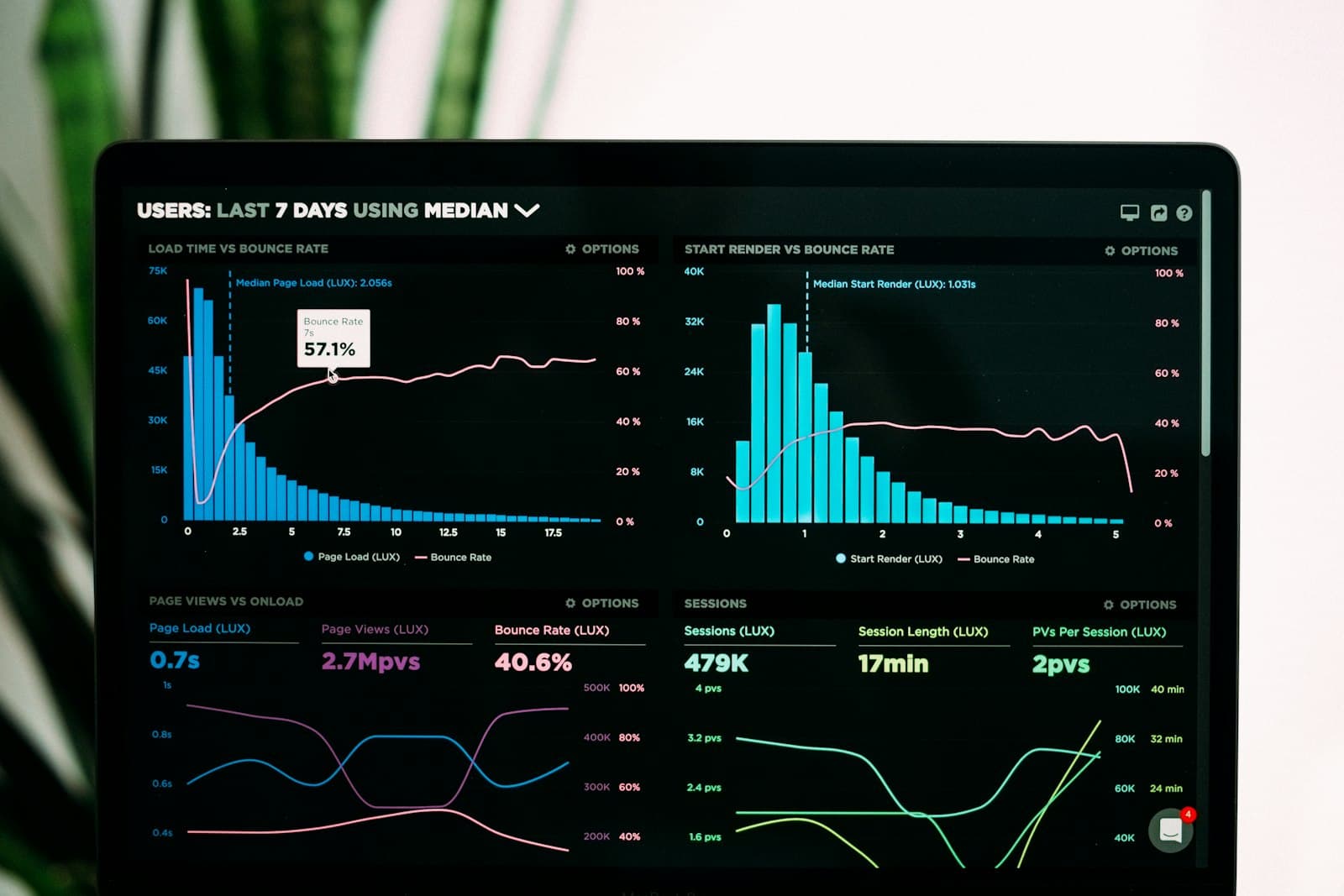
On the paid side, it is cost per conversion falling. It looks like the account is improving, and it frequently means the account has drifted toward cheaper, lower-intent queries and is now buying a larger number of worse leads. The number that catches it is what share of those conversions become customers, which requires closing the loop back from the CRM to the ad platform and is exactly the work most accounts skip.
On the organic side, it is total impressions rising. Impressions grow whenever a site becomes eligible for more queries, including queries with no commercial value whatsoever. A site can post a rising impression chart for a year while the specific pages that generate revenue lose position. The number that catches it is position and click volume for the commercial query set specifically, tracked as its own segment rather than folded into the site total.
What I can show, and what I cannot
I manage both sides of this, and it is worth being precise about the evidence rather than gesturing at it. On paid, I have managed USD 170,000 or more in total across seven or more countries — USD 113,000 on Google Ads and USD 57,000 on Meta — which is a cross-market operating record rather than a single-market one. Across those markets, roughly 12% of generated leads have typically become paying customers, and closer to 8% on consultancy engagements; those are cross-market lead-to-customer close rates on generated leads, not ad conversion rates.
On organic, a single managed property has reached 4.9 million impressions and 31,000 clicks over sixteen months in Google Search Console, at an average position of 7.5. That is one property rather than a portfolio total, the client is not named, and it is offered as an illustration of what the two channels look like side by side on a real account — not as a result anyone should expect to repeat. The gap between that impression count and that click count is itself the point of the previous section.
The honest scope of this comparison
This post is about businesses that sell something people search for. If your customers do not search — because the category is genuinely new, because purchases are relationship-driven, or because demand is created rather than captured — then neither channel is your first problem and both will underperform against a demand-generation channel. Search captures existing intent. It does not manufacture it.
It also assumes a business that can serve inbound demand. Adding search traffic to an operation that cannot answer the phone or follow up reliably converts a marketing budget into a customer experience problem — the most common reason a competent campaign produces a disappointing quarter.
Finally, it deliberately avoids cost figures. Click prices vary by market, query, season and competition to a degree that makes any quoted number misleading the moment it leaves the account it came from. Get your own numbers from your own account and your own Search Console property. They are the only ones that describe your business.
Where to go from here
I run this work through Arcetis, the performance marketing and growth systems practice I operate, where the paid and organic sides are deliberately built on one tracking implementation and one conversion definition. If the platform comparison you actually need is a social one rather than a search one, the companion piece on Meta Ads versus TikTok Ads applies the same decision-test structure to paid social.
Frequently asked questions
Is SEO better than Google Ads?
No, and any answer that names a universal winner is not describing your business. They are different cost structures for the same search intent. Google Ads buys attention that stops the day the budget stops. SEO builds a position you keep after the work is paid for, at the cost of a much longer and less predictable path to the first result. The right answer depends on how urgently you need pipeline and how much work you can fund before it pays back.
Should a new business start with SEO or Google Ads?
Usually Google Ads, for a reason that has little to do with either channel being superior. A new business does not yet know which queries convert, what customers call the problem in their own words, or whether the offer converts at all. Paid search answers those questions in weeks of live traffic rather than through guesswork, and the answers make the eventual SEO work far cheaper and better targeted. Start ads, learn, then build the organic pages the data justifies.
Is SEO cheaper than PPC in the long run?
Sometimes, and the comparison is less clean than it is usually presented. SEO has no cost per click, so unit economics improve as volume grows. But it carries fixed ongoing costs — content, technical work, and the maintenance required to hold a position — that are real whether or not the traffic arrives. Ads cost more per visit and cost nothing when paused. Compare total cost per acquired customer over a full year, including staff time, rather than comparing a click price to zero.
How long does SEO take to work?
There is no honest number, and anyone quoting one is selling. The timeline is determined by how often search engines crawl your site, whether the site is technically accessible in the first place, how competitive the specific queries are, how much authority the domain already carries, and how quickly you can actually publish. A low-competition local query on an established site behaves completely differently from a competitive commercial term on a new domain.
Can you run SEO and Google Ads at the same time?
Yes, and doing so is usually better than either alone — provided the two are actually connected. Ads supply the query and conversion data that tells you which organic pages are worth building. Organic pages supply the depth that ad landing pages rarely have room for. Run badly, the two teams optimize the same page in opposite directions and nobody can tell which channel produced a conversion, which is a measurement problem before it is a marketing problem.
Does running Google Ads help your organic rankings?
No. Paying for ads does not improve organic position, and Google states this directly. The genuine connection is indirect but real: ads produce query data, conversion data and landing page test results that make organic work better targeted. The benefit flows through what you learn, not through any ranking mechanism. Treat any claim that ad spend lifts rankings as a reason to distrust the source entirely.
What happens to my traffic if I stop paying for Google Ads?
It stops, essentially immediately, and this is the single most important structural difference between the two channels. There is no residual value in past ad spend beyond whatever you learned from it and whatever brand memory it created. Organic traffic does not behave this way — it decays slowly if the work stops, which feels safer and is also more dangerous, because the decline is easy to miss for months.
Which one should I fund if I can only afford one?
Fund the one that matches your cash position. If the business needs revenue inside the current quarter to keep operating, fund ads, because it is the only search channel with a controllable start date. If you can carry work that pays back later without stress, fund the site and organic pages, because the cost structure is better once it works. This is a cash-flow decision wearing a marketing costume.
Ten minutes on where your search budget should go first
If you are trying to decide whether the next chunk of budget goes into paid search or into the site itself, bring the situation to a free 10-minute call. I will tell you which question I would answer first, and if the honest answer is that you should spend nothing on either until the landing page is fixed, I will say that instead.
Direct: +977 9846162626 · lamichhanesapun2@gmail.com
This post supports the frameworks documented in full on the Authority page.