Meta Ads vs TikTok Ads: Where Each Actually Earns Its Budget

Key takeaways
- The meaningful difference between Meta and TikTok is not targeting. It is what creative survives on each feed and how fast each one exhausts what you made.
- Creative production load is the real cost difference. TikTok consumes new assets faster, which makes it an operational commitment rather than a budget line.
- A business without a functioning creative pipeline should not start on TikTok, because the platform will expose the shortage faster than it can be fixed.
- Meta rewards structured, one-variable-at-a-time testing against a mature measurement stack. TikTok rewards volume of native-feeling creative and punishes repurposed assets.
- Audience intent differs more than age does. People arrive on both platforms to be entertained, but Meta carries far more explicit commercial surface area around that.
The short answer
If your business can produce short-form video continuously — not in a launch batch, continuously — TikTok is worth a real test. If it cannot, run Meta and stop reading comparison posts, because every advantage TikTok has is conditional on a creative supply you do not have.
That is the whole rule. The platforms are far more similar in targeting capability than the discourse suggests, and far more different in what they demand from you operationally every week. The choice is a production question wearing a media-buying costume.
| Meta Ads | TikTok Ads | |
|---|---|---|
| What the feed rewards | Clear offer, recognizable format, strong hook | Content that does not read as an advertisement |
| Creative consumption rate | Slower — assets last longer | Faster — assets are exhausted sooner |
| Repurposed creative | Tolerated, often works | Punished, usually visibly |
| Measurement maturity | Longer-established stack and practitioner base | Comparable infrastructure, thinner accumulated knowledge |
| Audience intent | Entertainment plus large commercial surface | Entertainment first, commerce layered on |
| What it demands from you | Testing discipline | A production pipeline |
The one-line rule
Meta is a budget line. TikTok is an operational commitment. Businesses that treat the second as the first produce a month of promising results followed by a quarter of decline they misread as a targeting problem.
Where my experience stops, stated plainly
I have managed USD 57,000 on Meta Ads as part of USD 170,000 or more managed in total across seven or more countries, alongside USD 113,000 on Google Ads. Everything I write about Meta below comes from running accounts and dealing with real client money.
I have not managed budget on TikTok Ads. Every TikTok section in this post is therefore built from platform mechanics and published documentation rather than from operating experience, and I have written it that way deliberately — describing how the system works and what follows from that, rather than telling you what happened in accounts I did not run. Where a claim would require operating evidence I do not have, I have left it out rather than borrowing someone else's. You should apply the same discount to this post that you would apply to any other secondhand account.
The difference is not targeting
Both platforms sell access to an algorithmically selected audience, both have moved decisively away from manual interest stacking toward broad targeting with the model doing the selection, and both increasingly treat the creative asset itself as the primary targeting signal. That convergence is the single most important thing to understand before comparing them, because it means the lever you actually control is the same lever on both: what you make.
Which is why the old comparison framing — whose targeting is more granular — answers a question that stopped mattering. When the model decides who sees the ad based substantially on who responds to the ad, the creative is the targeting. The platforms then differ in what kind of creative their feed will carry.

Creative production load is the real cost difference
Every advertising channel consumes creative. The rate at which it does so is an operating cost, it is rarely budgeted, and it varies enormously between these two platforms.
The mechanism behind the difference is structural rather than mysterious. A feed that surfaces content primarily through algorithmic recommendation rather than through a social graph shows any given piece of content to a larger, faster-cycling audience. The audience that will respond to a specific asset is reached sooner. Performance then decays sooner, and the platform needs a new asset earlier. Nothing about that requires TikTok-specific insider knowledge; it follows from how a recommendation-first feed distributes content.
The practical consequence is that TikTok is not a channel you add to a budget. It is a channel you add to an operation. If the answer to "who makes the next twelve videos" is "we will figure that out", the platform will find that out for you within a month.
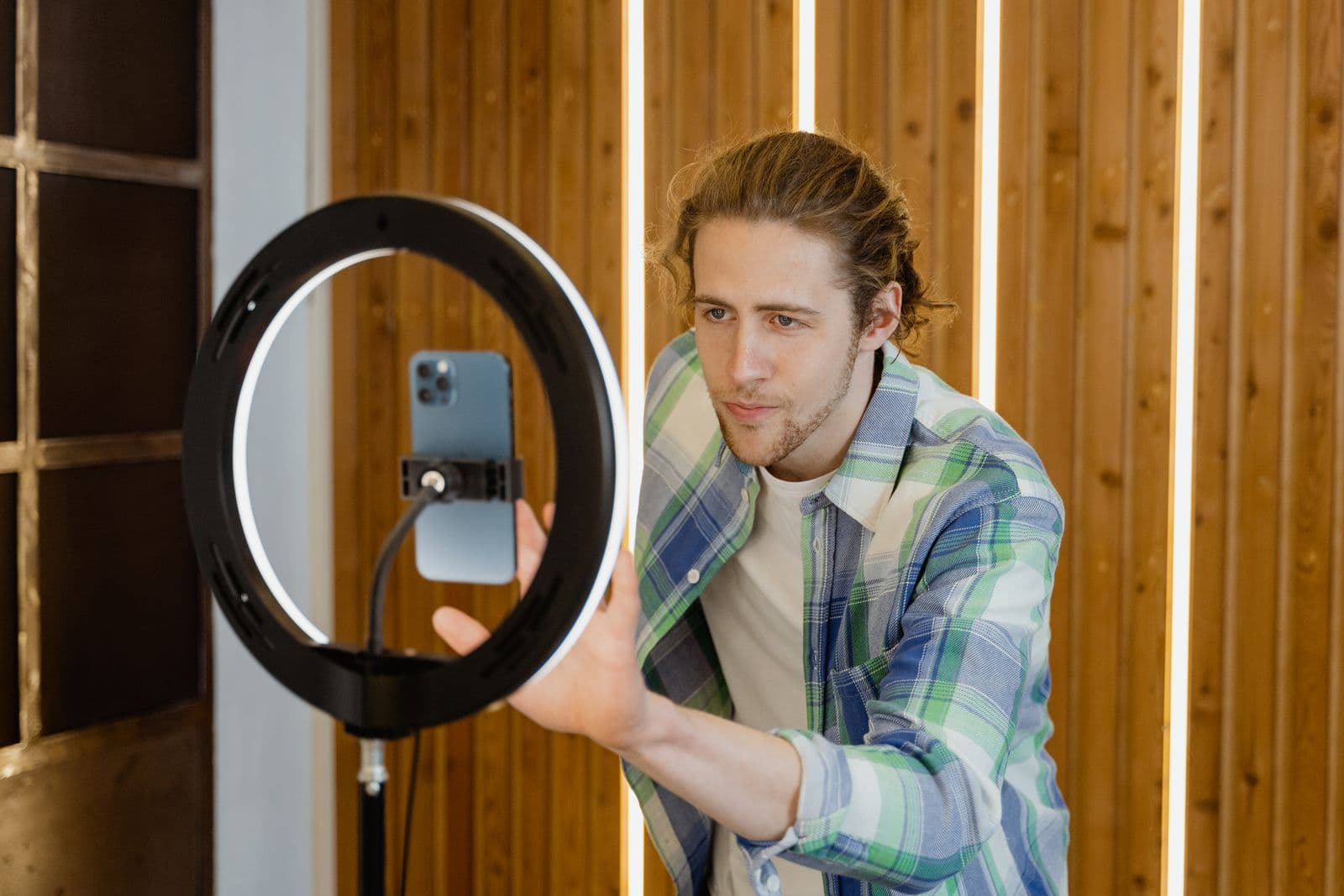
What a functioning pipeline actually requires
- A named person or supplier responsible for producing video on a fixed cadence, with that responsibility written down rather than assumed.
- A backlog of concepts, not a backlog of edits. Running out of ideas is the failure that stops production, not running out of editing time.
- A way to shoot without a production day — phone footage, user-generated content, creator partnerships — because anything requiring a scheduled shoot cannot sustain the cadence.
- Rights and usage terms settled in advance for anything featuring a creator or a customer, because discovering a rights problem after an asset performs is the expensive version.
- A review step light enough that it does not become the bottleneck. Brand approval processes designed for broadcast media will strangle a short-form pipeline.
What Meta is genuinely good at
Meta rewards structured testing more than any other paid social environment, and that is its real advantage for a business with limited specialist capability. Because assets last longer, a single creative variable can be isolated and read before the result is swamped by fatigue. That is what makes disciplined testing possible at all, and it is the argument in the companion post on running creative tests that produce answers instead of noise — one variable per test, a significance threshold defined before launch, and a documented hypothesis rather than a documented result.
It also has the deepest practitioner knowledge base in paid social. When something breaks — and something always breaks — the odds that someone has already documented the specific failure are far higher on Meta than anywhere else. For a small team, that is worth more than a marginal difference in reach.
Where Meta fails
It fails when the account is treated as a set of settings rather than a creative program. An account with excellent structure and stale creative will decline steadily while every diagnostic looks fine, and the operator will spend weeks adjusting bids and audiences in response to a problem that was always in the asset.
It also fails on measurement more quietly than people expect. The platform reports its own attributed conversions, and those numbers are useful for optimizing within the platform and misleading as a picture of business results. Any serious Meta account needs server-side event delivery and an independent definition of a conversion that the business, not the platform, controls.
The failure that looks like a Meta problem and is not
A pattern worth naming because it burns so much time: performance declines, the operator restructures campaigns, consolidates ad sets, changes bid strategy, rebuilds audiences, and each change produces a brief improvement that decays again. Every one of those interventions resets the learning phase, which creates a short recovery that is mistaken for a fix. The underlying cause was creative the audience had already seen, and no structural change addresses it. If two consecutive restructures have failed to hold, stop restructuring and produce new assets.
What TikTok is structurally good at
Stated as mechanism rather than as claimed results: TikTok's distribution is recommendation-first, which means content can reach beyond an account's existing audience without the account having built one. For an advertiser this has a specific implication — the ceiling on reach is set by whether the content earns attention, not by how established the brand is. That is a genuinely different starting position from a graph-driven feed.
The Spark Ads format follows directly from this. Promoting an existing organic post, with its original creator attribution and engagement intact, exists because content that already reads as native survives the feed better than content produced as an advertisement. That the format exists at all is the platform documenting its own constraint, which is more informative than most vendor material.
Where TikTok fails
It fails, predictably, wherever the creative supply runs out — and the failure is disguised as a targeting or bidding problem, which is why it wastes so much time. It fails for businesses whose approval process cannot move at feed speed. And it fails when a brand insists on production values that make the asset legible as an advertisement, which is a strategy that is coherent on other channels and self-defeating here.
The native format requirement
Every short-form video platform imposes the same three constraints, and they are constraints on form rather than preferences about style. Vertical framing, because the device is held that way and letterboxing signals immediately that the asset came from somewhere else. Sound-on delivery, because the audio is part of the content rather than an accompaniment to it. And an opening that reads as content, because the scroll decision happens before any brand message has been delivered.
A polished sixteen-by-nine brand film cropped to vertical fails all three at once, which is why the cross-posting question has an asymmetric answer. TikTok-native video usually performs acceptably in Meta Reels placements. Meta-native brand creative usually does not survive on TikTok. If you are going to reuse assets in one direction, reuse them in that one.
Audience — what people arrived to do
The age composition difference is real and is also the least useful way to think about this. TikTok skews younger. That fact does not tell you whether your product will sell there, and businesses that make the decision on demographics alone tend to get it wrong in both directions.
The more decision-relevant difference is what the platform is for. Meta hosts a large amount of explicitly commercial behavior alongside its social feed — marketplaces, business pages, groups organized around buying and reviewing things. A commercial message lands in an environment where commerce is already a normal activity. TikTok is an entertainment feed with commerce layered onto it. The message has to earn its place first, which is a higher bar and also, when cleared, a more attentive audience.
This intent difference is the same one that separates paid search from paid social generally, and it is worth reading alongside the comparison of search intent against social interruption, because a business choosing between two social platforms has usually already made a larger and less examined choice about buying interrupted attention rather than expressed demand.
| Recurring demand | Meta | TikTok |
|---|---|---|
| New creative concepts | Periodic, driven by measured fatigue | Continuous, driven by feed velocity |
| Format work | Multiple placements from one concept | Vertical, sound-on, native opening, every time |
| Testing discipline | High — assets last long enough to read | Lower payoff per test, higher payoff per volume |
| Measurement work | Server-side events and an independent conversion definition | The same, with less documented precedent to copy |
The prerequisite nobody wants to hear
Before comparing platforms, confirm you have a conversion event you defined yourself, delivered server-side, that both platforms will be measured against. Without it you are not comparing platforms — you are comparing two vendors' opinions of their own performance.
The decision test
Work through these in order. The first clear answer is the answer, and most businesses will stop at the first question.
- Can you name the person who will produce video every week for the next quarter, and does that person have capacity? If no, run Meta. Nothing below matters.
- Does your product benefit from being demonstrated in motion? If yes, short-form video is worth testing regardless of platform, starting with Meta Reels placements where the measurement is better understood.
- Does your approval process allow an asset to go from idea to live inside days? If no, fix that before adding TikTok, because the platform assumes it.
- Is your existing platform stable — a defined conversion event, server-side event delivery, and results you trust? If no, adding a second platform will produce two accounts you cannot read instead of one.
- Only if you cleared all four: run a bounded TikTok test with its own creative, its own budget, and a decision date set before launch.
When to run both, and the cost of doing it badly
- Budget split so thin that neither account accumulates enough conversion signal to exit its learning behavior. Two underfunded platforms produce less than one funded one, reliably.
- One creative set stretched across both feeds. This is the most common version and it produces the worst outcome — the assets are wrong for TikTok and increasingly stale on Meta.
- Two attribution reports that disagree, with the sum of platform-claimed conversions exceeding actual orders. Once that happens, every budget conversation becomes an argument about numbers rather than a decision.
- No decision date on the test. A TikTok test with no pre-agreed stopping rule becomes a permanent small line item that nobody defends and nobody kills.
The fix is sequencing rather than restraint. Get one platform to a result you trust, build the creative capacity beyond what that platform consumes, and add the second from surplus.
The metric that lies

On both platforms, the metric that lies here is video view rate. It is the number that looks healthiest on a new creative batch, it is the number the platform surfaces most prominently, and it is largely a measure of how well the first seconds held attention rather than of whether anything followed. A creative set can post excellent view rates while producing nothing downstream, and the operator reads that as promising early signal.
The number that catches it is the rate at which the audience continues past the hook and then acts — completion paired with the conversion event you defined yourself, held to the same definition on both platforms. Comparing Meta-reported conversions to TikTok-reported conversions is comparing two vendors' self-assessments. Comparing both against one independent event definition is the only version of this that means anything.
The honest scope
This post does not tell you which platform will be cheaper for your business, because that depends on your category, market, offer and creative quality to a degree that makes any general answer misleading. It also does not include performance figures for TikTok, because I do not have any I could stand behind, and secondhand platform numbers are exactly the material this blog exists to avoid.
It also assumes paid social is the right family of channel at all. If your customers actively search for what you sell, the first comparison to run is not between two social platforms — it is between capturing existing demand and interrupting attention, which is the subject of the companion post on funding search versus building organic. A business that skips that question and optimizes a social platform choice has answered the second question well and the first one not at all.
Where to go from here
Answer question one of the decision test honestly, today. If the creative pipeline does not exist, the platform comparison is settled and your next project is production capacity rather than media buying. If it does exist, run a bounded test with its own assets and a stopping date. I run this work through Arcetis, the performance marketing and growth systems practice I operate, where paid social decisions start from what the business can actually produce each week rather than from what a platform comparison recommends.
Frequently asked questions
Are TikTok ads better than Facebook ads?
No platform is better in general, and the honest comparison is about what each one costs you to run rather than what each one delivers. Meta rewards structured testing against a mature measurement stack and tolerates a slower creative cadence. TikTok rewards a high volume of native-feeling video and degrades quickly without it. If your business can produce short-form video continuously, TikTok is worth testing. If it cannot, the comparison is already settled.
Can I run the same creative on Meta and TikTok?
You can, and it usually underperforms on TikTok specifically. A polished, brand-led asset built for a Meta placement reads as an advertisement in a feed where the audience is scrolling past advertisements. The reverse transfer works better — TikTok-native video often performs acceptably in Meta Reels placements. Treat cross-posting as a cost-saving compromise you are making deliberately, not as a strategy.
Is TikTok only for young audiences?
The audience skews younger than Meta, but the more useful difference is what people arrived to do rather than how old they are. TikTok is an entertainment feed with commercial intent layered on top. Meta carries a much larger surface of explicitly commercial behavior — marketplaces, business pages, groups organized around purchases. Age composition is the headline; intent composition is what actually changes your results.
How much creative do I need to run TikTok ads?
More than you think, and more importantly, continuously rather than in a launch batch. The honest test is not how many assets you can produce for the first month but whether you can sustain the same rate in month four without the process depending on one enthusiastic person. If the answer is no, the platform will surface that shortage as declining performance and you will read it as a targeting problem.
Which platform should a small business start with?
Usually Meta, for operational reasons rather than performance ones. Meta tolerates a slower creative cadence, has a longer-established measurement and conversion API stack, and has a far deeper body of practitioner knowledge for troubleshooting. That combination means a small team can run it competently with less specialized capability. Add TikTok when there is a repeatable way to produce native video, not before.
Do TikTok ads work for B2B?
Sometimes, and the burden of proof is higher than for consumer products. The mechanism that can work is reaching an individual decision-maker as a person rather than as a job title, which is the same mechanism that made Meta viable for some B2B categories. What does not work is transplanting a long-cycle enterprise sales motion into an entertainment feed and expecting the format to carry it. Test with a low-friction offer before committing.
Is TikTok ad measurement as reliable as Meta?
Meta has the longer-established measurement stack, including a server-side conversions API that has been through several iterations of privacy-driven change and a large body of practitioner knowledge about how to implement it correctly. TikTok offers comparable server-side event infrastructure, but the accumulated implementation knowledge around it is thinner. Expect to do more of your own verification, and hold both platforms to the same independent conversion definition rather than to their own reported numbers.
Should I run both platforms at the same time?
Only once one of them is working and your creative supply can genuinely serve two. Running both badly is a common and expensive outcome: budget split thin enough that neither platform exits its learning behavior, one creative set stretched across two feeds that reward different things, and two attribution reports that disagree. Sequence it. Get one platform to a stable result, then add the second from a position of surplus rather than hope.
Ten minutes on whether your creative pipeline can carry a second platform
If you are considering adding a platform and want an honest read on whether the creative supply exists to support it, bring the situation to a free 10-minute call. I will tell you what I would check first, and if the answer is that you should fix the platform you already run instead, I will say that.
Direct: +977 9846162626 · lamichhanesapun2@gmail.com
This post supports the frameworks documented in full on the Authority page.